

Casting vs Coating Resin: Choosing the Right Solution


Most American and Canadian resin artists have faced project setbacks from using the wrong type of resin. A single mistake can ruin hours of work, leaving bubbles, soft spots, or uneven finishes. Deciding between casting resin and coating resin is more than a technical choice—it directly impacts the final quality and durability of your craft. This guide breaks down the key material differences so you can select the best resin for each creative vision and avoid costly errors.
Table of Contents
Key Takeaways
Point | Details |
Understand the Differences | Recognize that casting resin is for thick, multi-dimensional projects, while coating resin is designed for thin, glossy finishes. |
Mix Ratios Matter | Use appropriate mix ratios: 2:1 for casting resin for deep pours and 1:1 or 3:1 for coating resin for surface applications. |
Avoid Common Mishaps | Prevent project failures by ensuring the correct resin type and conditions, and always conduct a test pour. |
Select Based on Application | Choose resin based on project requirements, considering depth, finish, and curing speed for optimal results. |
Core Definitions and Common Misconceptions
Resin crafting involves two primary techniques: casting and coating, each with unique properties and applications. Understanding these differences prevents costly mistakes and ensures professional results. Casting resin and coating resin are fundamentally different materials designed for specific creative purposes.
Casting resin, often called deep-pour resin, specializes in creating thick, multi-dimensional projects. Its slow-curing formula allows bubbles to naturally escape, making it perfect for complex three-dimensional art pieces like river tables, substantial jewelry, and object encapsulation. Typical characteristics include:
Extended curing time (24-48 hours)
Ability to pour layers 2-4 inches deep
Low exothermic reaction
Minimal shrinkage during hardening
Coating resin, conversely, is engineered for thin, glossy surface applications. Its rapid curing mechanism produces a smooth, hard finish ideal for tabletops, artwork, and decorative surfaces. Key features include:
Quick curing time (12-24 hours)
Thin layer application (1/16 to 1/8 inch)
High gloss finish
Faster chemical reaction
The most dangerous misconception is attempting to use these resins interchangeably. Pouring coating resin in thick layers risks significant problems like overheating, incomplete curing, and potential project failure. Professional resin artists understand that each resin type demands specific techniques and applications.
Pro tip: Always conduct a small test pour to understand your specific resin’s behavior before committing to a large project.
Here’s a quick visual comparison of casting resin and coating resin for reference:
Property | Casting Resin | Coating Resin |
Typical Use | 3D projects, deep pours | Surface coatings, thin layers |
Layer Thickness | 2-4 inches per pour | 1/16-1/8 inch per coat |
Curing Speed | Slow (24-48 hours) | Fast (12-24 hours) |
Finish | Crystal clear, deep look | Glossy, hard surface |
Bubble Handling | Bubbles escape easily | Needs heat or care to remove |
Application Danger | Using for thin coats wastes potential | Overheating if poured deeply |
Physical Characteristics and Formulation Distinctions
Resin formulations are precision-engineered systems with distinct molecular structures tailored for specific artistic applications. The viscosity and chemical composition of casting and coating resins represent fundamental design differences that impact their performance across various creative projects.
Casting Resin represents a specialized formulation characterized by remarkable fluidity and low viscosity. Its molecular structure allows for exceptional clarity and minimal bubble entrapment. Key physical characteristics include:
Extremely low viscosity (thin, water-like consistency)
Extended molecular crosslinking time
Enhanced translucency
Minimal heat generation during curing
Capacity for deep pour applications (2-4 inches)
Coating Resin, conversely, is designed with a thicker, more robust molecular framework. Its high-viscosity formulation creates hard, durable surface finishes optimized for thin layer applications. Distinctive properties encompass:
Higher viscosity (honey-like consistency)
Rapid molecular bonding
Accelerated curing mechanisms
Superior surface hardness
Exceptional abrasion resistance
The chemical differences between these resins fundamentally dictate their performance. Casting resin’s slower molecular reaction allows complete degassing and minimizes thermal stress, while coating resin’s rapid crosslinking produces an immediate, glossy finish. Understanding these nuanced formulation distinctions prevents potential project failures and ensures optimal material selection.
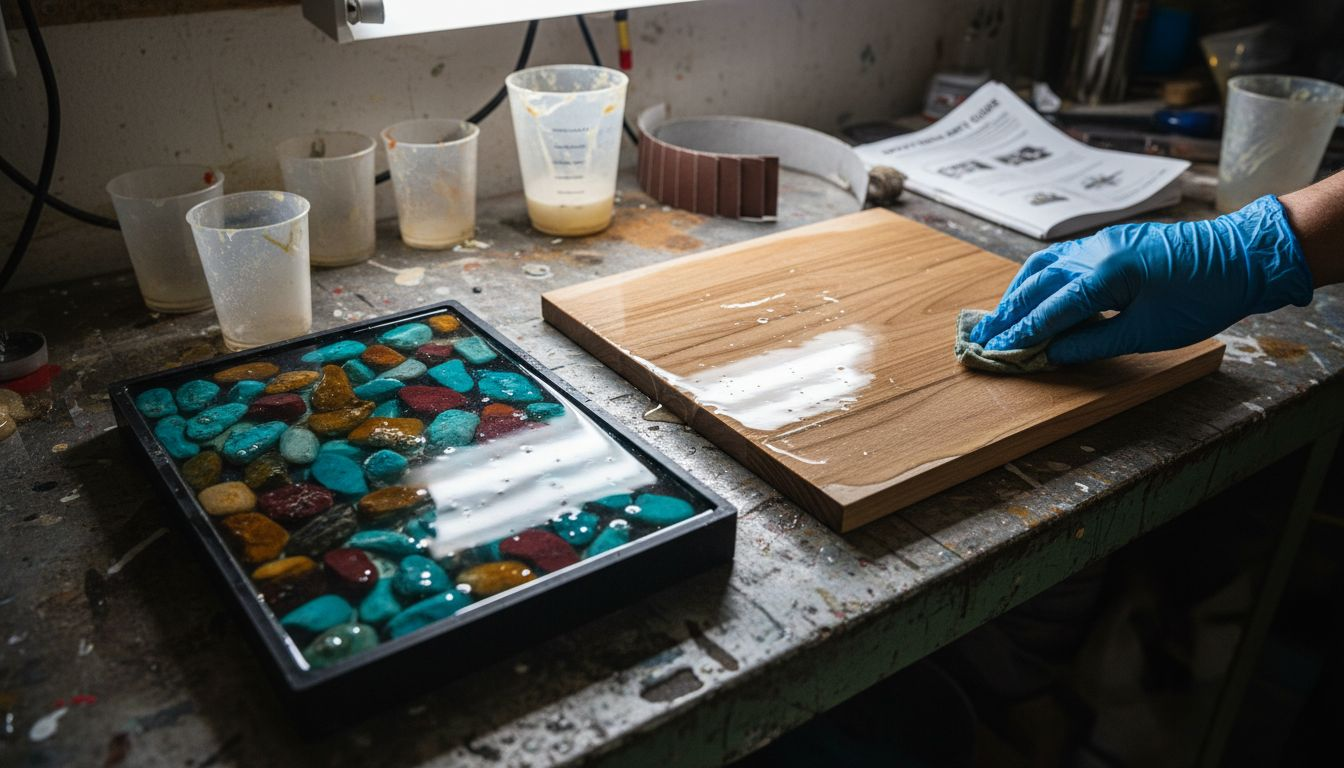
Pro tip: Always match your resin’s molecular characteristics precisely to your specific project requirements for predictable, professional results.
Mix Ratios, Pour Depths, and Curing Times
Mix ratios represent the critical foundation of successful resin projects, determining the material’s structural integrity and curing performance. Casting and coating resins require precise mixing proportions that dramatically impact their final characteristics and overall project success.
Casting Resin Mix Ratios typically follow a 2:1 configuration, allowing for more complex and nuanced chemical interactions. These ratios enable:
Deeper pour capabilities (2-4 inches)
Extended working time
Gradual heat dissipation
Minimal shrinkage
Enhanced bubble release
Coating Resin Mix Ratios generally utilize a 1:1 or 3:1 proportion, optimized for surface applications. Their characteristics include:
Rapid curing (12-24 hours)
Thin layer application (1/4 inch or less)
Immediate glossy finish
Higher viscosity
Quick molecular bonding
Curing times represent another fundamental distinction between these resin types. Casting resin’s slower molecular progression allows for intricate projects requiring meticulous detail, while coating resin’s accelerated curing supports quick turnaround and surface preservation. Professionals must carefully select their resin based on project complexity, desired finish, and time constraints.
Pro tip: Always measure your resin components precisely using calibrated digital scales to ensure consistent mix ratios and optimal performance.
Project-Specific Applications and Outcomes
Resin selection fundamentally determines the success of artistic and functional projects. Specialized resin applications require precise material matching to achieve optimal aesthetic and structural outcomes, transforming creative vision into tangible reality.
Casting Resin Project Applications excel in complex three-dimensional endeavors that demand intricate detailing and depth:
Jewelry creation with embedded objects
Sculptural river tables
Complex molding techniques
Object encapsulation
Large volume art pieces
Detailed figurine casting
Coating Resin Project Applications specialize in surface enhancement and protection:
Glossy tabletop finishes
Wood surface preservation
Picture frame sealing
Protective countertop layers
High-traffic floor coatings
Decorative art surface treatments
The critical distinction lies in their performance characteristics. Coating and casting resins deliver dramatically different outcomes based on their unique molecular structures, with casting resin providing unparalleled depth and clarity, while coating resin offers superior surface durability and rapid finishing.
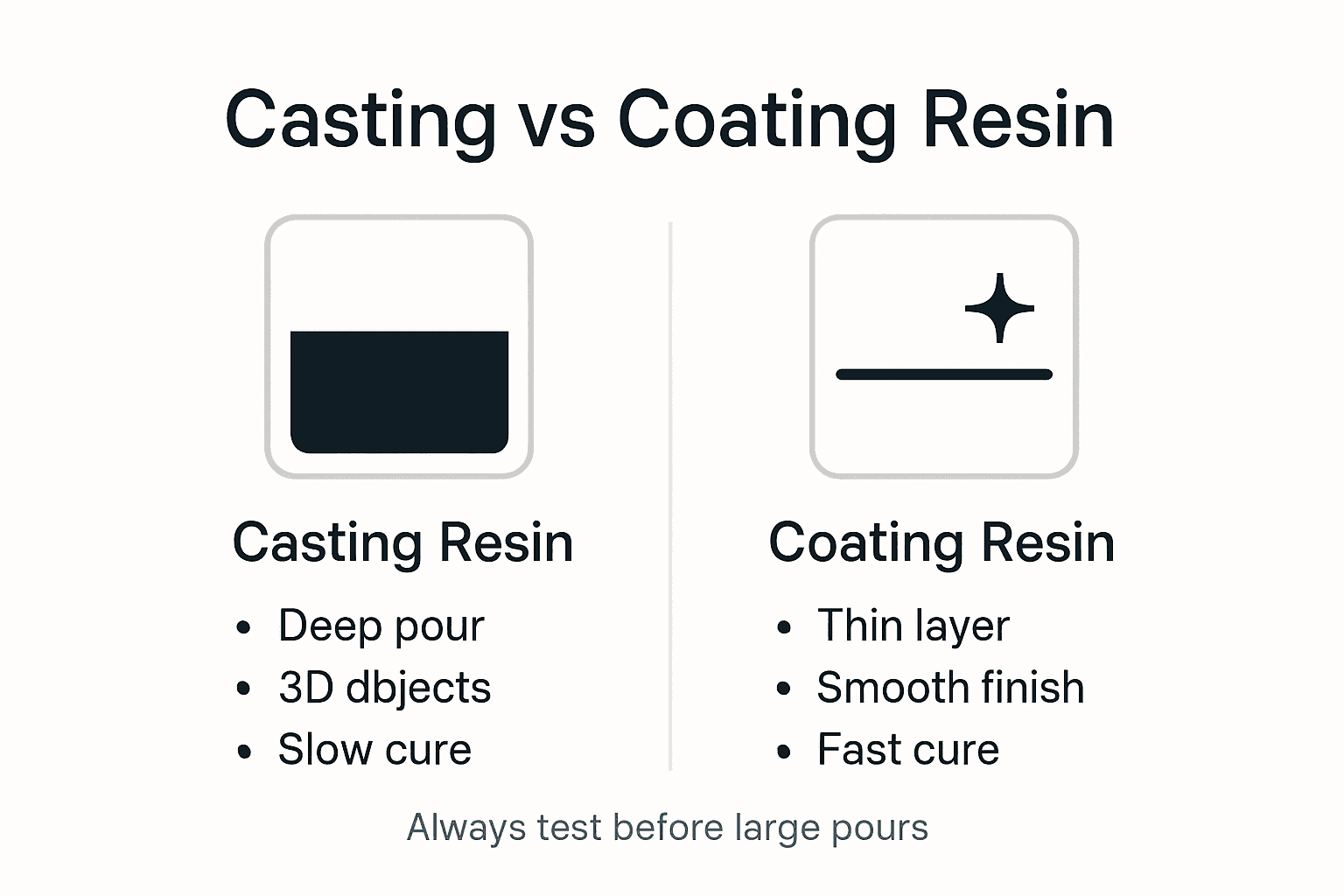
Pro tip: Always perform a small test pour to validate your chosen resin’s compatibility with specific project materials and desired aesthetic outcomes.
Risks, Mistakes, and Selecting the Right Resin
Resin project failures often stem from fundamental misunderstandings about material properties and application techniques. Critical mistakes can transform a promising creative endeavor into a frustrating experience, making precise material selection paramount.
Common Resin Selection Risks include:
Using coating resin for deep pours
Attempting thick layers with incompatible resins
Ignoring working temperature conditions
Misunderstanding curing time requirements
Overlooking viscosity differences
Failing to account for project complexity
Potential Project Failure Outcomes:
Uneven surface finishes
Trapped air bubbles
Incomplete chemical curing
Premature yellowing
Structural cracking
Surface tackiness or soft spots
Selecting the appropriate resin demands comprehensive understanding of material properties and technical specifications, considering factors like depth, desired finish, curing speed, and environmental conditions. Professionals must meticulously evaluate project requirements against specific resin characteristics to ensure optimal outcomes.
The following table summarizes key risk factors and their impact on project success:
Mistake Type | Cause | Common Result |
Wrong resin depth | Using coating resin for thick pours | Overheating, curing failure |
Poor mixing | Inaccurate component ratios | Soft, tacky, weak finish |
Ignoring temperature | Not adjusting to environment | Premature curing or yellowing |
Overlooking viscosity | Choosing resin without considering flow | Bubbles, uneven finish |
Pro tip: Always conduct a small test pour using your selected resin to validate its performance and compatibility before committing to a full-scale project.
Find the Perfect Resin for Every Project Need
Choosing between casting and coating resin is critical to avoid common pitfalls like overheating, incomplete curing, or surface imperfections. If you want to master your resin art with precise mix ratios and the right formulation, having access to quality materials designed for your specific project is essential. Whether you are crafting deep-pour sculptures or applying glossy surface finishes, understanding the unique properties of each resin type empowers you to create stunning, professional results.
Explore our premium selection at Krystal Resin where you will find a wide range of casting and coating resins tailored for artists, hobbyists, and professionals. Shop now to benefit from our reliable shipping including US-based distribution and enjoy free shipping on qualifying orders. Start your next resin project with confidence by visiting Krystal Resin today and experience how the right materials make all the difference.
Frequently Asked Questions
What is the main difference between casting resin and coating resin?
Casting resin, often referred to as deep-pour resin, is designed for thick projects, allowing for layers of 2-4 inches deep. Coating resin is used for thin applications, offering a glossy finish and typically cures quickly.
What are the ideal projects for using casting resin?
Casting resin is ideal for three-dimensional projects that require depth, such as jewelry with embedded objects, sculptural river tables, detailed figurine casting, and large volume art pieces.
Can coating resin be used for deep pours?
No, coating resin is not suitable for deep pours. Using it for thick layers can lead to overheating and incomplete curing, resulting in project failures.
How should I measure resin components for mixing?
Always measure resin components precisely using calibrated digital scales. This ensures accurate mix ratios, which are crucial for achieving the desired structural integrity and curing performance.
Recommended
Comments