

7 Expert Resin Crafting Tips Every Artist Should Know

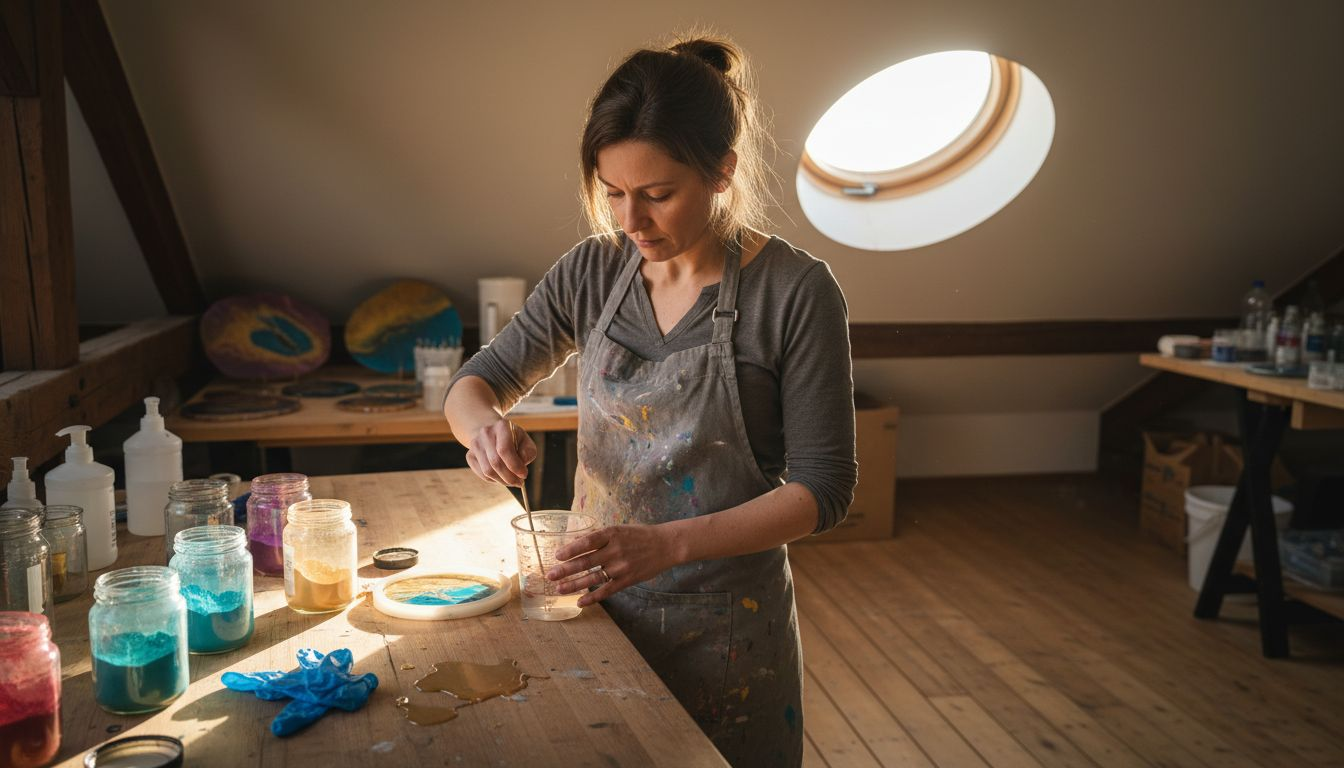
Resin art can be both exciting and overwhelming when you are aiming for flawless results. Achieving a professional finish takes more than just creativity—you need the right techniques and a clear understanding of your materials. Simple mistakes with resin measuring, mixing, or even demolding can leave you with bubbles, cracks, or dull finishes that fall short of your vision.
The good news is that proven methods can help you work confidently with resin every step of the way. You will learn how to select the best resin type for your artwork, master precise measuring, and use finishing touches that make your pieces stand out. Get ready to uncover practical tips that can turn any resin project into a work of art you will be proud to share.
Table of Contents
Quick Summary
Takeaway | Explanation |
1. Choose the right resin carefully | Selecting the appropriate resin affects appearance, durability, and quality of your artwork significantly. Understand different types and their properties to ensure optimal results. |
2. Measure and mix accurately | Precision in resin ratios is crucial; small errors can compromise the final product. Use digital scales and follow manufacturer instructions for the best results. |
3. Prevent and eliminate bubbles | Bubbles can ruin your artwork. Use techniques like warming the resin and applying heat to ensure a smooth finish. |
4. Layer for depth and strength | Use multiple resin layers to enhance visual appeal and structural integrity. Wait for tacky layers before adding new ones for optimal adhesion. |
5. Finish your piece with care | Proper sanding and polishing techniques can transform your project. Aim for a glass-like finish to exemplify true craftsmanship and professionalism. |
1. Choose the Right Resin for Your Project
Selecting the perfect resin is a critical first step for any successful art project. Your choice can dramatically impact the final appearance, durability, and overall quality of your artwork.
Resin is far from a one-size-fits-all material. Different resin types offer unique properties that make them suitable for specific artistic applications. Understanding these variations helps artists make informed decisions and achieve professional results.
Key considerations when choosing resin include:
Viscosity: How thick or thin the resin flows
Cure time: How quickly the resin hardens
UV resistance: Protection against discoloration
Flexibility: Rigidity or elasticity of the final product
Color compatibility: Ability to mix with pigments and dyes
Professional artists know that the right resin can elevate a good project to an exceptional artwork.
When selecting your resin, consider your specific project requirements. Jewelry makers might prefer a crystal-clear casting resin, while sculptors could need a more durable epoxy with high mechanical strength.
Material properties matter. Some resins excel in outdoor environments, while others are best suited for indoor display. Factors like temperature resistance, impact strength, and potential chemical interactions all play crucial roles in your selection process.
Pro tip: Always purchase a small sample batch to test the resin’s performance before committing to a large project.
2. Measure and Mix Resin Accurately Every Time
Precision is the secret weapon of successful resin artists. Getting your resin mixture just right can mean the difference between a stunning masterpiece and a failed project.
Chemical reactions in resin mixing/18%3A_Ethers_and_Epoxides_Thiols_and_Sulfides/18.09%3A_Chemistry_MattersEpoxy_Resins_and_Adhesives) depend on accurate ratios between resin and hardener. Even a small measurement error can compromise your entire artwork’s structural integrity and appearance.
Key steps for accurate resin mixing:
Use a digital scale for precise measurements
Measure components in separate containers first
Follow manufacturer’s exact mixing ratio
Mix slowly to prevent air bubbles
Use clean mixing tools
Accuracy transforms good projects into professional-quality art.
Most epoxy resins require a specific ratio typically around 1:1 or 2:1 resin to hardener. Invest in quality measuring tools to ensure consistent results. Professional artists often use digital scales that measure to the tenth of a gram for ultimate precision.
Environmental factors like temperature and humidity can also impact your mixing process. Work in a controlled environment with consistent temperatures between 70-80 degrees Fahrenheit for optimal results.
Pro tip: Always keep a notebook to record exact mixing ratios and conditions for each successful project, allowing you to replicate your best work with scientific accuracy.
3. Eliminate Bubbles with Simple Techniques
Bubbles are the silent saboteurs of resin art that can transform a beautiful piece into an amateur-looking project. Understanding how to prevent and remove these pesky air pockets is crucial for achieving professional results.
Surface tension plays a critical role in bubble formation during resin crafting. These tiny air pockets can ruin the smooth finish of your artwork if not handled correctly.
Effective bubble elimination techniques include:
Use a heat gun on low setting
Work in a warm environment
Pour resin slowly and deliberately
Use a toothpick to pop surface bubbles
Allow resin to settle before final curing
Professional resin artists know that patience is the key to bubble-free masterpieces.
Warming your resin can dramatically reduce bubble formation. By heating your resin to between 90-115 degrees Fahrenheit before mixing, you create a more fluid environment that allows trapped air to escape more easily.
Additional strategies involve using a pressure pot or vacuum chamber for more advanced projects. These tools help compress and remove microscopic air bubbles that manual techniques might miss.
Pro tip: Always have a small torch or heat gun nearby and learn to use it with a gentle sweeping motion just above the resin surface to coax bubbles to the top without scorching your artwork.
4. Master Colorants for Consistent Finishes
The secret to stunning resin art lies not just in technique but in understanding how different colorants interact with your medium. Achieving vibrant yet consistent color requires more than random mixing.
Colorant types dramatically impact resin aesthetics and can transform your artistic vision into reality.
Colorant options for resin artists include:
Resin dyes: Create translucent stained-glass effects
Mica powders: Provide shimmery opaque finishes
Alcohol inks: Offer unique blending possibilities
Liquid pigments: Deliver smooth color integration
Metallic powders: Add subtle shimmer and depth
Professional artists know that color is about chemistry as much as creativity.
Thorough mixing is crucial. Incomplete color distribution can lead to uneven patches or unexpected color variations. Spend extra time ensuring your colorant is uniformly integrated into the resin.
Consider how different colorants bond with resin. Some chemically integrate while others remain suspended. This fundamental understanding helps predict how your final piece will look and behave.
Experimental artists often create test samples to understand how specific colorants interact with their particular resin type. Keeping detailed notes about ratios and techniques can help you replicate successful color combinations.
Pro tip: Start with small test batches when experimenting with new colorants and always mix thoroughly to prevent color separation and achieve professional results.
5. Pouring in Layers for Depth and Strength
Resin layering is an art form that transforms ordinary projects into extraordinary masterpieces. By strategically building depth through multiple resin pours, you can create stunning visual effects and enhance your artwork’s structural integrity.
Layer-by-layer curing reduces potential defects and allows for incredible creative control. Each layer acts like a building block that contributes to your project’s overall strength and aesthetic appeal.
Key strategies for successful layered resin pouring:
Wait for initial layer to become tacky but not fully cured
Use a torch to remove surface bubbles between layers
Maintain consistent temperature during pouring
Clean surface thoroughly before adding next layer
Allow partial curing to prevent color blending
Precision in layering separates amateur crafts from professional artwork.
Timing is everything when pouring resin layers. Each layer needs to be partially cured to create strong adhesion without complete hardening. This delicate balance requires practice and patience.
Professional artists often incorporate different techniques like embedding objects or creating color gradients between layers. Some even add metallic powders or inclusions to create unique visual textures and depth.
Pro tip: Keep a small notebook to document exact curing times and layer thickness for each project, allowing you to replicate successful techniques and learn from each experiment.
6. Demold Safely to Prevent Cracks and Damage
Removing your resin creation from its mold is a delicate art that can make or break your entire project. One wrong move could transform your carefully crafted masterpiece into a shattered disappointment.
Demolding requires strategic approach and precision to preserve your artwork’s integrity and aesthetics.
Key demolding strategies for resin artists:
Wait until resin is partially but not fully cured
Use appropriate release agents
Flex mold gently to reduce surface tension
Check curing temperature and time
Inspect mold for potential sticking points
Patience during demolding separates amateur crafters from professional artists.
Temperature and timing are critical. Demolding too early can cause deformation while waiting too long makes removal challenging. The sweet spot is when your resin has reached a flexible yet stable state.
Professional resin artists recommend understanding your specific resin type and its unique demolding characteristics. Different resins have varying cure times and flexibility levels that impact the removal process.
Some artists use specialized demolding tools or create custom mold designs with draft angles that facilitate easier part removal. Silicone molds often provide the most forgiving demolding experience for intricate projects.
Pro tip: Always keep a thin layer of release agent on hand and practice gentle, consistent pressure when removing your resin piece to minimize potential damage.
7. Finishing Touches for a Professional Result
The final stage of resin crafting can transform a good project into an extraordinary masterpiece. Proper finishing techniques are the difference between amateur and professional-looking artwork.
Polishing techniques enhance resin aesthetics and showcase your artistic skill.
Essential finishing techniques include:
Wet sanding with progressive grit sandpaper
Using microfiber cloths for final polish
Applying specialized resin polishing compounds
Checking for and removing surface imperfections
Creating uniform glossy or matte finishes
Professional artists know that finishing is where true craftsmanship emerges.
Sanding requires patience and precision. Start with coarser grits around 600 and gradually move to finer grits up to 22,000 for a glass-like finish. Each progression smooths out microscopic scratches from the previous sanding stage.
Different projects might require unique finishing approaches. A jewelry piece needs a different polishing technique compared to a decorative sculpture. Understanding your specific project’s requirements is key to achieving that perfect, professional look.
Professional artists often invest in specialized tools like buffing wheels, polishing mats, and high-quality microfiber cloths to achieve impeccable results. Lighting can help you spot and address surface irregularities that might go unnoticed.
Pro tip: Always test your finishing technique on a small, inconspicuous area first and work in a well-ventilated space to ensure the best possible outcome.
Below is an organized table presenting the key methodologies, considerations, and professional tips discussed throughout the article for excelling in resin crafting projects.
Aspect | Details | Importance |
Choosing the Right Resin | Understand resin types, properties, and project needs. | Ensures the material matches the artwork’s requirements. |
Measuring and Mixing | Use precise ratios, controlled environment, and proper tools. | Achieves superior resin consistency and quality. |
Managing Bubbles | Apply heat and use controlled methods. | Creates smooth and professional finishes. |
Incorporating Colors | Select appropriate colorants and mix thoroughly. | Produces vibrant and consistent visual effects. |
Layering Techniques | Pour in controlled stages with bubble removal in between. | Adds depth and strength to the artwork. |
Safe Demolding | Time and handle carefully using release agents. | Prevents damage to completed resin pieces. |
Finishing Touches | Employ sanding, polishing, and inspections. | Ensures professional and aesthetically pleasing results. |
Elevate Your Resin Art with Expert Tools and Quality Materials
Mastering resin crafting requires precision and the right supplies to avoid common pitfalls like bubbles, uneven color, or damaged molds. If you want to bring your artistic vision to life with confidence you need everything from high-quality resin and colorants to reliable measuring tools and molds that ensure flawless demolding.

Explore premium resin products and craft supplies at Krystal Resin where every item is selected to support your creative goals. Whether you are testing new colorants or layering your pours for depth, our range helps you achieve professional finishes every time. Don’t settle for anything less than excellence. Start shopping now and take advantage of free shipping options designed to get your essentials delivered fast so you won’t delay your next masterpiece.
Frequently Asked Questions
What is the best way to choose the right resin for my art project?
Choosing the right resin involves understanding its properties, such as viscosity, cure time, and UV resistance. Consider the specific requirements of your project to select a resin that enhances both appearance and durability.
How can I accurately measure and mix resin for consistent results?
To achieve accurate resin mixing, use a digital scale for precise measurements and always follow the manufacturer’s recommended mixing ratio. Measure components in separate containers first to prevent errors and mix slowly to avoid air bubbles.
What are the most effective techniques for eliminating bubbles in resin?
Effective bubble elimination techniques include using a heat gun on a low setting, pouring the resin slowly, and allowing it to settle before final curing. You can also use a toothpick to pop surface bubbles, achieving a smooth finish with patience.
How do I create depth and strength by pouring resin in layers?
Pouring resin in layers requires you to wait until the initial layer becomes tacky but not fully cured before adding the next layer. This method allows each layer to bond effectively and enhances the overall strength and aesthetic appeal of your artwork.
What precautions should I take when demolding my resin piece?
To demold safely, wait until the resin is partially cured and use appropriate release agents. Gently flex the mold to reduce surface tension, making the removal of your artwork easier and preserving its integrity.
How do I achieve a professional finish on my resin art?
Achieving a professional finish involves wet sanding your piece with progressive grit sandpaper, followed by polishing with microfiber cloths. Focus on using finer grits up to 22,000 for a glass-like finish, ensuring a high-quality look that highlights your craftsmanship.
Recommended
This was a fantastic read with practical advice that both beginners and experienced resin artists can apply. I especially liked the tips on accurate mixing and bubble removal. Pairing these techniques with Professional Heat Guns can make achieving a smooth, flawless finish even easier. Thanks for sharing such clear, valuable, and inspiring resin crafting insights!