

Types of Resin Explained: Choosing the Best for Crafts


Finding the best resin for a creative project can feel confusing when so many options line the shelves. Whether crafting bold jewelry in a Canadian studio or perfecting epoxy pours in an American home workshop, understanding the unique traits of each resin type is vital for both stunning results and lasting quality. This guide highlights the versatile material properties and practical applications of popular resins, helping artists and DIY enthusiasts confidently choose solutions suited to their craft goals.
Table of Contents
Key Takeaways
Point | Details |
Resin Types | Selecting the right resin (Epoxy, Polyester, Polyurethane, or UV) is crucial based on the specific project requirements and desired properties. |
Safety Measures | Proper handling and use of personal protective equipment are essential to avoid health risks associated with resin exposure. |
Cost Considerations | Evaluating total project costs, including safety and long-term performance, is important for effective budget management. |
Testing Recommendations | Always conduct small tests of resin before full-scale application to ensure compatibility and optimize results. |
What Is Resin And How Is It Used?
Resin is a versatile material that transforms from liquid to solid, offering incredible potential for creative projects. Versatile thermoplastic compounds have revolutionized crafting, providing artists and hobbyists with an adaptable medium for creating intricate designs and durable objects.
Originally derived from natural tree substances, modern resins are predominantly synthetic materials developed in the 1930s. These engineered compounds come in multiple formulations, each designed for specific applications ranging from jewelry making to industrial manufacturing. Synthetic resins differ significantly from their natural predecessors by offering more consistent performance and greater design flexibility.
Key characteristics of resin include:
Ability to harden into durable plastic forms
Capacity to be molded into complex shapes
Resistance to environmental degradation
Versatility across multiple craft and industrial applications
Organic compound mixtures are typically insoluble in water and can be used in numerous creative contexts. Crafters particularly appreciate resin for its transformative properties, allowing them to encapsulate objects, create stunning jewelry, design decorative items, and produce intricate artistic pieces.
Pro tip: Always select a resin type specifically matched to your project’s requirements to ensure optimal results and durability.
Epoxy, Polyester, And Polyurethane Resin Compared
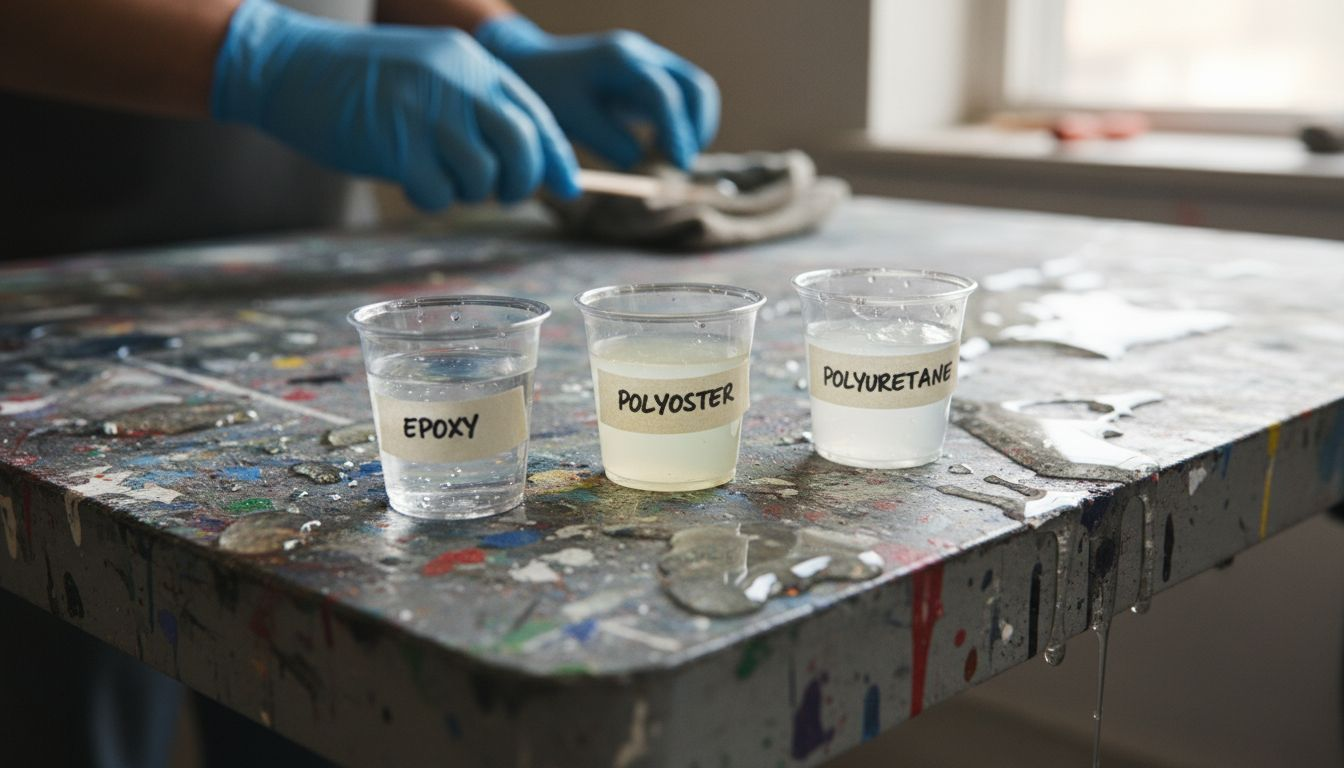
Resin types offer unique properties that make them suitable for different creative and industrial applications. Mechanical properties vary significantly across epoxy, polyester, and polyurethane formulations, making material selection crucial for project success.
Epoxy Resin stands out as the premium option, delivering exceptional performance across multiple domains. Key characteristics include:
Superior mechanical strength
Excellent chemical resistance
Remarkable adhesion capabilities
Ideal for high-performance applications
Polyester Resin provides a more affordable alternative, particularly popular in automotive and fiberglass industries. While cost-effective, these resins have some limitations:
More brittle compared to epoxy
Higher volatile organic compound emissions
Lower mechanical strength
Suitable for budget-conscious projects
Polyurethane Resin offers unique advantages with its remarkable flexibility. Chemical composition enables versatile applications/18%3A_Ethers_and_Epoxides_Thiols_and_Sulfides/18.09%3A_Chemistry_MattersEpoxy_Resins_and_Adhesives) across multiple fields, including:
Flexible foam production
Durable coating systems
Enhanced elasticity
Impressive toughness
The selection between these resin types depends on specific project requirements, balancing factors like cost, durability, and intended use.
Pro tip: Always conduct a small test batch with your chosen resin to understand its specific working characteristics and compatibility with your project materials.
Casting Resin, UV Resin, And Specialty Formulas
Specialty resin formulations represent a sophisticated approach to material design, offering crafters and professionals unprecedented versatility in creative and technical applications. These unique resin types are engineered to meet specific performance requirements across diverse projects.
Casting Resin emerges as a robust two-part system designed for creating substantial, detailed objects. Key characteristics include:
Ideal for embedding artifacts
Capable of producing thick layers
Chemically cured manufacturing process
Excellent for sculptural and dimensional work
UV Resin provides an entirely different approach to material transformation. This rapid-curing formulation offers:
Instantaneous solidification through ultraviolet light
Perfect for intricate, small-scale crafts
Minimal preparation time
Precision detailing capabilities
Specialty Formulas represent the cutting edge of resin technology, custom-tailored for specific performance needs. These advanced compositions can be engineered to deliver:
Enhanced heat resistance
Superior electrical insulation
Increased flexibility
Accelerated curing times
The selection of the appropriate resin type depends entirely on your specific project requirements, material interactions, and desired final characteristics.
Pro tip: Always test a small sample of your chosen resin to understand its precise working properties and compatibility with your specific project materials.
Key Features And Ideal Applications For Each Type
Chemical structures determine resin performance, influencing their suitability for diverse creative and industrial applications. Understanding these nuanced characteristics helps crafters and professionals select the most appropriate material for their specific project requirements.
Epoxy Resin offers exceptional versatility with outstanding technical properties:
Superior structural strength
Remarkable chemical resistance
Excellent adhesive capabilities
Ideal for protective coating applications
Perfect for industrial and artistic precision work
Polyester Resin provides an economical solution with unique characteristics:
Cost-effective manufacturing
Widely used in boat building
Suitable for automotive repair projects
Faster curing compared to some alternatives
Limited by higher styrene vapor emissions
Polyurethane Resin delivers remarkable flexibility across multiple domains:
Outstanding durability
Exceptional elasticity
Versatile foam and sealant applications
Adaptable to complex molding requirements
Superior performance in challenging environments
UV Resin revolutionizes rapid fabrication with precision-focused attributes:
Instantaneous light-activated curing
Perfect for intricate jewelry making
Minimal preparation time
Exceptional detail reproduction
Ideal for small-scale decorative projects
Pro tip: Match your resin selection precisely to your project’s specific mechanical, thermal, and aesthetic requirements to ensure optimal performance and longevity.
Here’s how the main resin types compare in creative and industrial contexts:
Resin Type | Ideal Use Cases | Typical Drawbacks |
Epoxy | Artistic and industrial coatings | Higher cost, longer curing |
Polyester | Automotive repairs, boat building | Brittleness, strong fumes |
Polyurethane | Flexible foams, seals | Sensitive to humidity, cost varies |
UV Resin | Jewelry, miniatures | Limited depth, needs UV light |
Casting Resin | Embedding objects, sculptures | Long cure times, needs precise mixing |
Specialty Formulas | Electronics, technical crafts | Expensive, may require training |
Safety, Toxicity, And Proper Handling Tips
Resin exposure risks require comprehensive safety protocols, particularly during uncured stages when chemical interactions pose significant health challenges. Understanding these potential hazards is crucial for protecting personal health and ensuring safe crafting environments.
Chemical Exposure Risks encompass multiple potential health impacts:
Skin and eye irritation
Respiratory system complications
Potential reproductive health concerns
Volatile organic compound emissions
Long-term sensitization potential
Personal Protective Equipment (PPE) becomes essential for safe resin handling:
Chemical-resistant gloves
Safety goggles or face shield
Respiratory protection mask
Protective long-sleeve clothing
Closed-toe work shoes
Workspace Safety Recommendations include:
Ensure excellent ventilation
Work in temperature-controlled environments
Use dedicated workspace away from living areas
Install carbon filter systems
Keep fire extinguisher nearby
Handling Best Practices:
Read safety data sheets thoroughly
Store materials in sealed containers
Clean spills immediately
Wash hands after handling
Avoid eating or drinking near workspace
Pro tip: Create a dedicated safety station with emergency wash materials, protective equipment, and clearly labeled first aid instructions before beginning any resin project.
The following table summarizes key safety concerns and recommended controls for resin crafting:
Risk Area | Main Concern | Essential Safety Practice |
Chemical exposure | Skin/eye irritation | Always wear chemical-resistant gloves |
Air quality | Inhalation of fumes | Ensure strong ventilation |
Fire hazard | Flammable materials | Keep a fire extinguisher nearby |
Long-term health | Sensitization risk | Use respirators and regular cleaning |
Workplace hygiene | Cross contamination | Dedicated work clothing and separate workspace |
Cost, Common Pitfalls, And Selection Mistakes
Material price fluctuations dramatically impact project budgets, requiring careful and strategic resin selection beyond simple upfront cost considerations.
Cost Considerations extend far beyond initial purchase price:
Initial material expenses
Long-term performance costs
Potential rework and replacement expenses
Safety equipment investments
Environmental disposal requirements
Common Selection Mistakes crafters frequently encounter:
Choosing resin solely based on price
Neglecting project-specific performance requirements
Overlooking compatibility with curing agents
Ignoring long-term durability factors
Underestimating required safety precautions
Lifecycle Cost Analysis reveals critical decision-making insights:
Compare total ownership costs
Evaluate performance across project lifecycle
Consider material handling expenses
Assess potential rework probabilities
Calculate environmental impact expenses
Resin Selection Strategy demands comprehensive evaluation:
Research multiple supplier options
Request technical performance specifications
Understand precise application requirements
Test small quantities before bulk purchase
Compare comprehensive cost structures
Pro tip: Request material safety data sheets and conduct thorough compatibility testing before committing to large-scale resin purchases.
Discover The Perfect Resin For Your Creative Projects Today
Choosing the right resin type can feel overwhelming when you face decisions about epoxy, polyester, polyurethane, or UV resin. The article highlights common challenges such as matching resin characteristics with your project’s durability, curing time, and safety needs. If you want to avoid costly mistakes and ensure your crafts turn out exactly as you imagined, selecting the right materials is critical.
At Krystal Resin, we understand these exact struggles and offer a carefully curated selection of top-quality resin types alongside accessories and colorants to elevate your artistic efforts. Whether you need exceptional strength from epoxy, flexible properties from polyurethane, or rapid curing with UV resin, our store supports your unique creative journey with fast shipping and reliable customer service.
Elevate your crafts now by exploring our full range of resin products and supplies at Krystal Resin. Don’t wait to experience how professional-grade materials can transform your artistry. Visit our landing page to shop with confidence and turn your ideas into stunning reality.
Frequently Asked Questions
What are the different types of resin used for crafts?
There are several types of resin used for crafts, including epoxy resin, polyester resin, polyurethane resin, UV resin, and casting resin. Each type has unique properties that make it suited for specific applications.
How do I choose the right resin for my project?
Choosing the right resin depends on your project’s specific requirements such as mechanical strength, flexibility, curing time, and intended use. Evaluate the properties of each resin type to find the best fit for your needs.
What are the advantages of using epoxy resin for crafts?
Epoxy resin offers superior mechanical strength, excellent chemical resistance, and remarkable adhesion capabilities, making it ideal for high-performance applications, artistic precision work, and protective coatings.
Can I use UV resin for detailed crafting?
Yes, UV resin is perfect for detailed crafting as it cures instantaneously when exposed to ultraviolet light, making it suitable for intricate jewelry and small-scale projects that require precision detailing.
Recommended
Comments