

Why Use Epoxy Resin for Art and Crafts
- Nima
- Jan 30
- 8 min read


Choosing the right material can make all the difference when your creative vision depends on strength, clarity, and a flawless finish. For many Canadian and American resin artists and DIY enthusiasts, finding epoxy resin that delivers professional results is a constant challenge. By understanding the unique chemical process behind epoxy resin, you can unlock its full potential for jewelry, decor, and other artistic projects while enjoying its remarkable durability and beauty.
Table of Contents
Key Takeaways
Point | Details |
Epoxy Resin Composition | Epoxy resin is a two-part system, consisting of a resin and hardener that create a strong material through chemical reactions. |
Variety of Applications | Epoxy resin is used for various artistic and practical applications, including jewelry making, home decor, and prototyping. |
Important Safety Measures | Always work in a well-ventilated area and use protective equipment when handling epoxy resin to ensure safety. |
Choosing the Right Type | When selecting an epoxy resin, consider the project requirements, including curing times and desired finish. |
What Is Epoxy Resin and How It Works
Epoxy resin is a versatile synthetic polymer that transforms liquid materials into incredibly durable, hard-surface creations through a fascinating chemical reaction. Artists and crafters love this material because it can convert ordinary objects into glossy, professional-looking pieces with remarkable strength and clarity.
At its core, epoxy resin is a two-part system consisting of a resin and a hardener that chemically interact to create an incredibly strong material. When these components are mixed, they trigger a cross-linking polymerization process that transforms the liquid into a solid, rigid substance with exceptional mechanical properties.
The chemical composition of epoxy resin makes it unique among polymers. Its key characteristics include:
High mechanical strength
Excellent thermal stability
Superior chemical resistance
Remarkable adhesive properties
Ability to bond with multiple surfaces
The curing process involves reactive epoxide groups within the resin molecules connecting and forming a tightly networked structure. This transformation happens through a precise chemical reaction where molecules interlock, creating a material that’s significantly stronger than its original liquid state.
How Epoxy Resin Works in Art and Crafts:
Mix the two components (resin and hardener) in precise ratios
Stir thoroughly to ensure complete chemical integration
Pour into molds or onto surfaces
Allow chemical cross-linking to occur
Achieve a crystal-clear, rock-solid final product
The magic of epoxy resin lies in its ability to transform from a liquid to an incredibly resilient solid through a controlled chemical reaction.
Pro tip: Always work in a well-ventilated area and wear protective gloves when mixing epoxy resin to ensure safe handling and optimal results.
Types of Epoxy Resin for Art Projects
Artists have a remarkable range of epoxy resin types to choose from, each designed to meet specific creative requirements. Epoxy resins come in diverse formulations that can transform ordinary art projects into extraordinary masterpieces, offering unique properties for different artistic techniques and applications.
The most common types of epoxy resin for art projects include:
Casting Resin: Ultra-clear and ideal for creating deep pour projects like river tables, jewelry, and decorative objects
Coating Resin: Designed for creating smooth, glossy surface finishes on artwork, paintings, and furniture
Quick-Setting Resin: Perfect for artists who need faster curing times and want to complete projects more rapidly
UV-Resistant Resin: Specialized formula that prevents yellowing and maintains clarity when exposed to sunlight
Flexible Resin: Provides more bend and movement, great for creating dynamic art pieces that require some flexibility
When selecting an epoxy resin, artists must consider several critical factors that influence the final artistic outcome. Chemical composition plays a crucial role in determining the resin’s performance, with variations in molecular structure affecting properties like viscosity, strength, and durability.
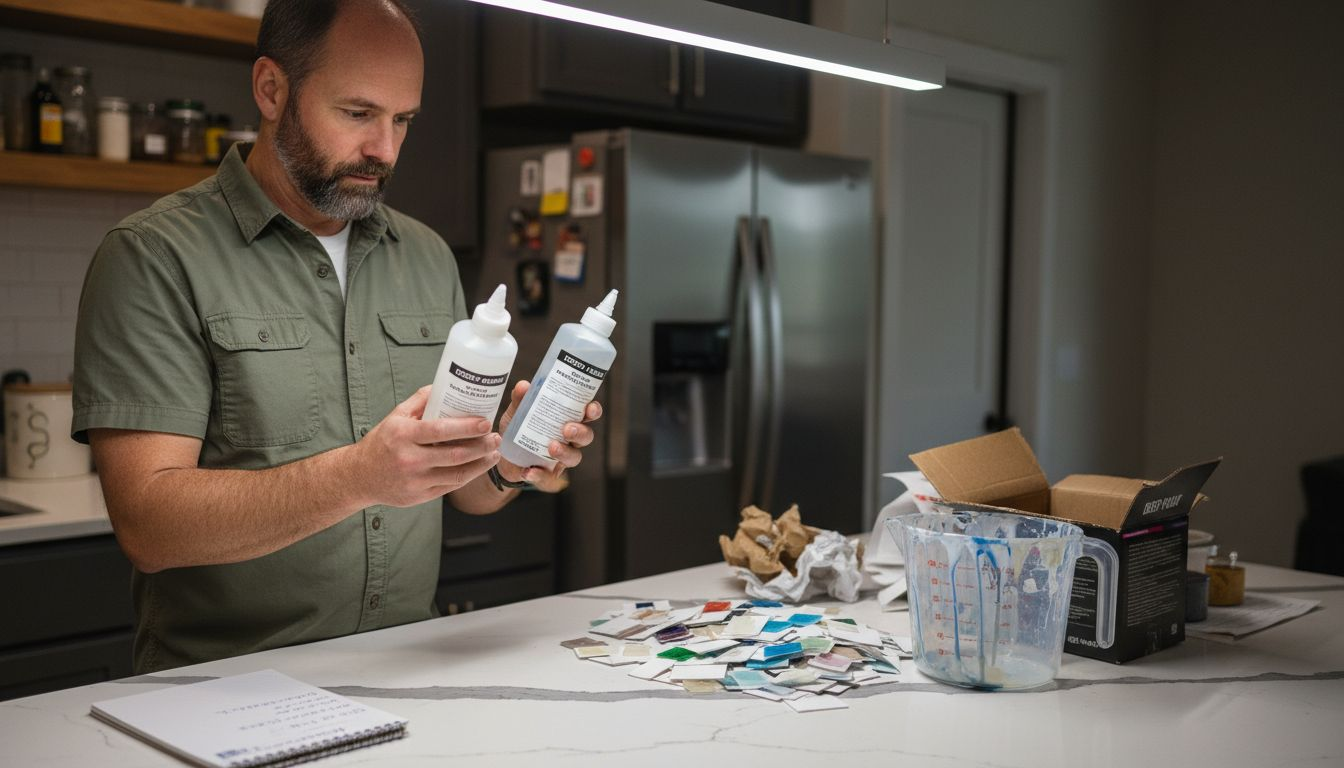
Here’s a quick reference to help you match common resin types with their ideal art applications:
Resin Type | Best Use Case | Key Strength |
Casting Epoxy Resin | Deep pour, jewelry, river tables | Maximizes clarity depth |
Coating Epoxy Resin | Tabletops, paintings, furniture | Glass-like surface finish |
Quick-Setting Resin | Small crafts needing speed | Accelerated cure times |
UV-Resistant Resin | Outdoor art, sunlit decor | Long-term clarity |
Flexible Resin | Bendable art, wearable pieces | Increased pliability |
Selecting the Right Epoxy Resin:
Assess your specific project requirements
Check the resin’s working and curing times
Evaluate transparency and color retention
Consider the required finish (glossy, matte, etc.)
Examine thermal and mechanical stability
Not all epoxy resins are created equal - each type offers unique characteristics that can dramatically impact your artistic vision.
Pro tip: Always test a small sample of your chosen epoxy resin before committing to a large-scale art project to understand its specific working properties and potential challenges.
Key Properties That Make Epoxy Stand Out
Epoxy resin distinguishes itself from other materials through exceptional mechanical and chemical properties that make it a powerhouse in artistic and industrial applications. Its unique molecular structure allows for remarkable versatility, transforming from a liquid to an incredibly strong, durable solid that can withstand extreme conditions.
The key standout properties of epoxy resin include:
Unparalleled Strength: Forms incredibly tough bonds with multiple surfaces
Chemical Resistance: Maintains integrity in challenging environments
Thermal Stability: Performs consistently across wide temperature ranges
Adhesive Capabilities: Bonds effectively with metals, glass, ceramics, and plastics
Customizable Properties: Can be tailored through different curing processes
Epoxy’s molecular structure enables it to create strong covalent bonds that provide exceptional mechanical performance. Artists and craftspeople appreciate its ability to maintain clarity, resist yellowing, and create smooth, glossy finishes that can transform ordinary materials into extraordinary artistic expressions.
Why Epoxy Properties Matter for Creators:
Provides long-lasting durability to art pieces
Allows for intricate design possibilities
Resists environmental degradation
Offers transparency and color preservation
Enables complex layering and embedding techniques
The true magic of epoxy lies in its ability to turn creative visions into permanent, resilient artworks that can withstand the test of time.
Pro tip: Experiment with different epoxy formulations to understand how their unique properties can enhance your specific artistic techniques and project requirements.
Practical Uses in Jewelry, Decor, and DIY
Epoxy resin has revolutionized creative crafting, offering artists and hobbyists an incredibly versatile medium for transforming ordinary materials into extraordinary art. From intricate jewelry designs to stunning home decor, this remarkable material opens up a world of artistic possibilities that were previously unimaginable.
The most popular practical applications for epoxy resin include:
Jewelry Making: Creating custom pendants, earrings, and bracelets
Home Decor: Designing river tables, wall art, and decorative objects
Functional Accessories: Crafting coasters, phone cases, and desk organizers
Artistic Preservation: Embedding objects like flowers, photographs, and memorabilia
Industrial Prototyping: Developing small-scale models and design prototypes
In jewelry design, artists can unleash their creativity by mixing colors, incorporating decorative elements, and experimenting with unique shapes and embedments. The material’s ability to capture and preserve delicate objects makes it perfect for creating wearable art that tells a personal story.
Exciting Resin Project Categories:
Personal Accessories
Home Furnishings
Artistic Sculptures
Functional Craft Items
Gift and Commemorative Pieces
Epoxy resin transforms creative imagination into tangible, lasting art that can be worn, displayed, and cherished.
Pro tip: Always practice your technique on small test pieces before committing to larger, more complex resin projects to understand material behavior and refine your artistic approach.
Safety and Cost Factors to Consider
Working with epoxy resin requires careful consideration of safety protocols and potential health risks. While the material offers incredible creative potential, artists and crafters must understand the necessary precautions to protect themselves and create a safe working environment.
Key safety considerations for epoxy resin include:
Ventilation: Always work in a well-aired space
Personal Protective Equipment: Use gloves, safety glasses, and protective clothing
Skin Protection: Avoid direct contact with uncured resin
Respiratory Safety: Use respiratory masks when mixing or sanding
Workspace Preparation: Cover surfaces and create a dedicated work area
Cost is another crucial factor for artists and hobbyists considering epoxy resin projects. The price range varies significantly depending on the project’s complexity, resin quality, and additional materials required. Professional-grade epoxy resins typically cost between $20 to $75 per kit, with specialized formulations potentially reaching higher price points.
Cost Breakdown for Resin Projects:
Entry-level resin kits: $20-$40
Professional-grade resins: $40-$75
Specialized artistic resins: $75-$150
Additional tools and accessories: $30-$100
Safety equipment: $25-$50
Understanding the full investment helps artists make informed decisions about their creative projects.
Pro tip: Start with smaller, less expensive resin kits to practice techniques and understand material behavior before investing in more costly professional-grade materials.
Epoxy Resin vs. Other Alternatives
Artists and crafters seeking the perfect material for their creative projects must carefully evaluate different resin alternatives and their unique properties. While multiple options exist, epoxy resin consistently emerges as a top choice for its exceptional performance and versatility.
The primary resin alternatives compared to epoxy include:
Polyester Resin: Faster curing, lower cost
Polyurethane Resin: More flexible, softer finish
Casting Resin: Designed for deep pour projects
UV Resin: Quick-curing with light activation
Silicone Resin: Extremely flexible, mold-making material
Each alternative offers distinct characteristics, but epoxy resin stands out due to its superior mechanical strength, incredible clarity, and remarkable adhesive properties. While polyester resin might cure faster and cost less, it lacks the refined finish and durability that epoxy provides for intricate artistic projects.
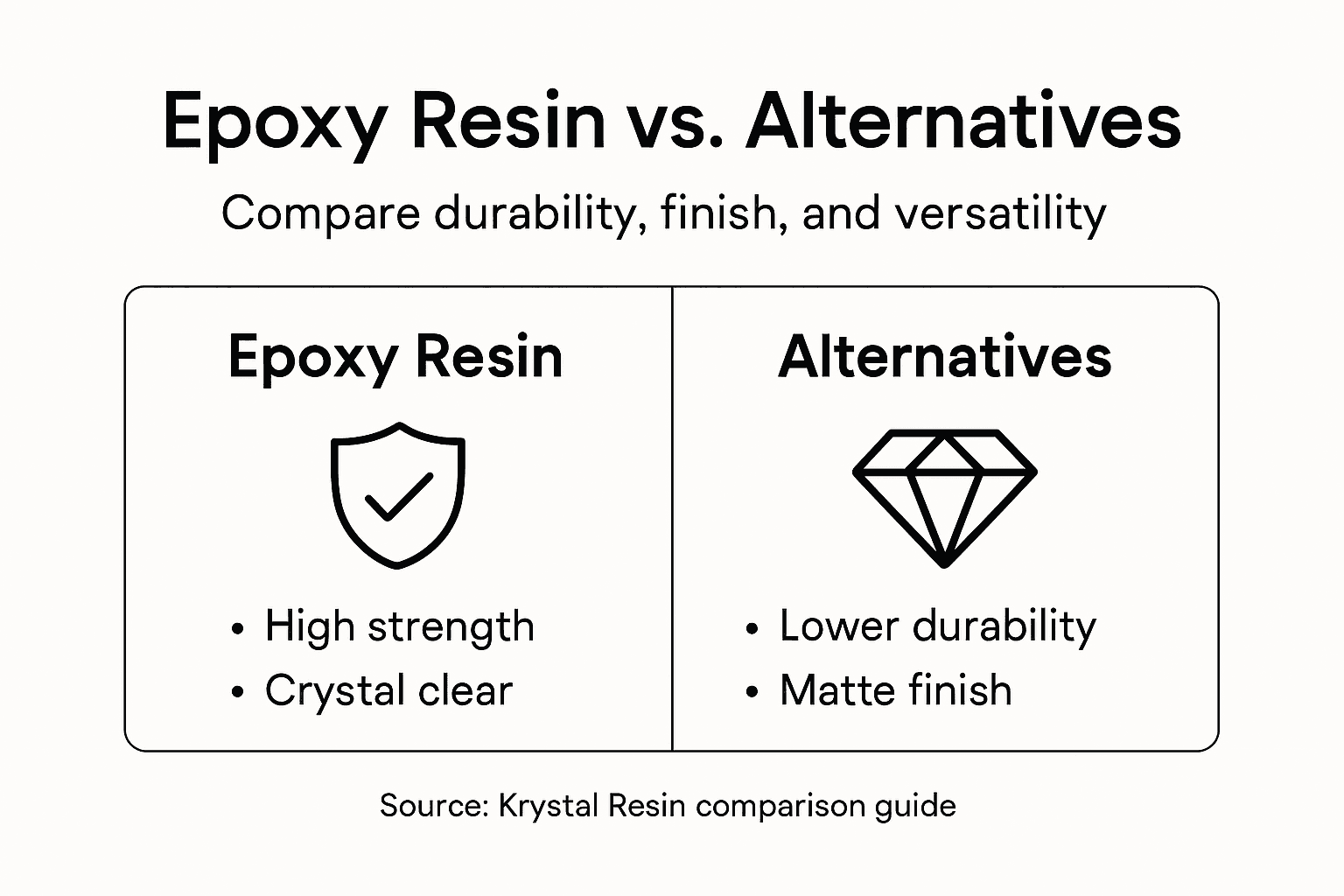
Compare how key resin alternatives perform in critical areas for artists:
Feature | Epoxy Resin | Polyester Resin | Polyurethane Resin |
Surface Clarity | Crystal clear | Moderate clarity | Variable |
Adhesive Strength | Exceptional | Moderate | Good |
Curing Speed | Moderate | Fast | Fast |
Cost per Kit | Moderate to high | Lower | Moderate |
Long-Term Durability | Excellent | Fair | Depends on blend |
Comparative Performance Factors:
Clarity and Transparency
Durability
Curing Time
Chemical Resistance
Versatility in Applications
Not all resins are created equal - the right choice depends on your specific creative vision and project requirements.
Pro tip: Conduct small test projects with different resin types to understand their unique working properties and determine which best suits your artistic needs.
Unlock Your Creative Potential with Premium Epoxy Resin Supplies
If you are inspired by the powerful advantages of epoxy resin like its crystal-clear finish and exceptional durability learning how to choose the right resin type is key to realizing your artistic vision. Whether your challenge is finding a reliable quick-setting resin or a UV-resistant formula to preserve your artwork’s clarity over time Krystal Resin provides tailored solutions for artists and crafters aiming to elevate their creations. Embrace the benefits of working with high-quality materials that offer consistent curing times and superb adhesive qualities to bring your jewelry making and home décor projects to life.
Discover a wide selection of epoxy resins and all the essential craft supplies at Krystal Resin. Take advantage of free shipping options on qualifying orders and now experience faster delivery with our US-based warehouse. Start refining your resin art and DIY projects today by visiting our site to shop trusted products designed to support your creative journey with confidence. Explore how the right materials transform your ideas into lasting masterpieces now.
Frequently Asked Questions
What is epoxy resin and how does it work in art projects?
Epoxy resin is a two-part synthetic polymer consisting of resin and hardener that, when mixed, undergoes a chemical reaction to form a durable, solid material. Artists use it to create glossy, professional-looking pieces that are both strong and clear.
What types of epoxy resin are best for artistic projects?
Common types of epoxy resin include casting resin for deep pours, coating resin for glossy finishes, quick-setting resin for fast projects, UV-resistant resin to prevent yellowing, and flexible resin for bendable art pieces. Each type is suited for different applications based on desired outcomes.
How do I safely work with epoxy resin?
To work safely with epoxy resin, always operate in a well-ventilated area, wear protective gloves, and use safety glasses. Avoid direct skin contact with uncured resin, and consider using a respirator when mixing or sanding to minimize inhalation risks.
What are the key properties that make epoxy resin suitable for crafts?
Epoxy resin is known for its unparalleled strength, excellent chemical resistance, thermal stability, adhesive capabilities with multiple surfaces, and customization options. These properties make it ideal for intricate designs, durability, and long-lasting finishes.
Recommended
Comments