

Why Use Resin in Art: Versatility and Creative Impact


Finding the perfect material for your next resin art masterpiece often feels confusing, especially with so many options on the market. Whether you are designing custom jewelry or bold Canadian home décor, knowing the differences between resin types is essential for lasting results. This guide highlights the advantages, creative techniques, and safety tips that help American artists create striking works using versatile resin art methods.
Table of Contents
Key Takeaways
Point | Details |
Resin art is accessible to all skill levels. | Many believe that resin art requires professional training, but it welcomes artists of any experience through various techniques. |
Understanding resin types is essential. | Different resins serve unique purposes; artists should grasp their specific properties for optimal project results. |
Safety precautions are vital in resin art. | Proper ventilation, protective equipment, and careful chemical handling are crucial for a safe creative environment. |
Resin art offers distinct visual effects compared to traditional materials. | Its glossy finish and ability to embed objects set resin art apart, enhancing creative expressions beyond typical techniques. |
Defining Resin Art and Common Misconceptions
Resin art represents a dynamic and transformative artistic medium that transforms liquid epoxy into stunning visual expressions. Artists use versatile resin techniques to create everything from jewelry and home decor to abstract wall pieces that capture imagination.
At its core, resin art involves working with a specialized liquid material that chemically transforms from a fluid state into a durable, transparent solid. This unique process allows artists unprecedented creative flexibility:
Capturing intricate details and textures
Embedding objects like flowers, metals, or photographs
Creating multi-dimensional color layers
Producing glossy, glass-like finishes
Developing complex three-dimensional designs
Many aspiring artists mistakenly believe resin art requires professional training or expensive equipment. In reality, resin art welcomes creators of all skill levels, with techniques ranging from simple pour methods to complex multilayered compositions.
The most significant misconception surrounding resin art involves assuming all resins perform identically. Different resin types offer unique properties - some excel in jewelry making, while others work better for larger sculptural pieces or outdoor installations. Artists must understand these nuanced differences to select the right medium for their specific creative vision.
Pro tip: Start with small, affordable resin projects to build confidence and understand material behaviors before attempting more complex artistic compositions.
Major Resin Types and Their Best Uses
Resin art encompasses a diverse range of material types, each offering unique characteristics for creative expression. Common resin types vary significantly in their properties, durability, and artistic applications.
The primary resin types artists and crafters utilize include:
Epoxy Resin: Renowned for exceptional clarity and strength
Ideal for jewelry making
Creates glossy, transparent finishes
Provides strong adhesion and durability
Polyester Resin: Quick-curing and cost-effective
Best for fiberglass projects
Suitable for outdoor installations
Less expensive than other options
Polyurethane Resin: Offers remarkable flexibility
Excellent for mold-making
Provides superior abrasion resistance
Works well for detailed sculptural pieces
UV resin represents a game-changing option for artists seeking rapid project completion. This specialized resin cures almost instantly when exposed to ultraviolet light, making it perfect for small, intricate crafts that require precise detailing.
Understanding the nuanced differences between resin types is crucial for artists. Different resins excel in specific applications, from jewelry and home decor to industrial-strength coatings. Factors like curing time, flexibility, and chemical resistance play significant roles in selecting the right resin for a particular creative project.
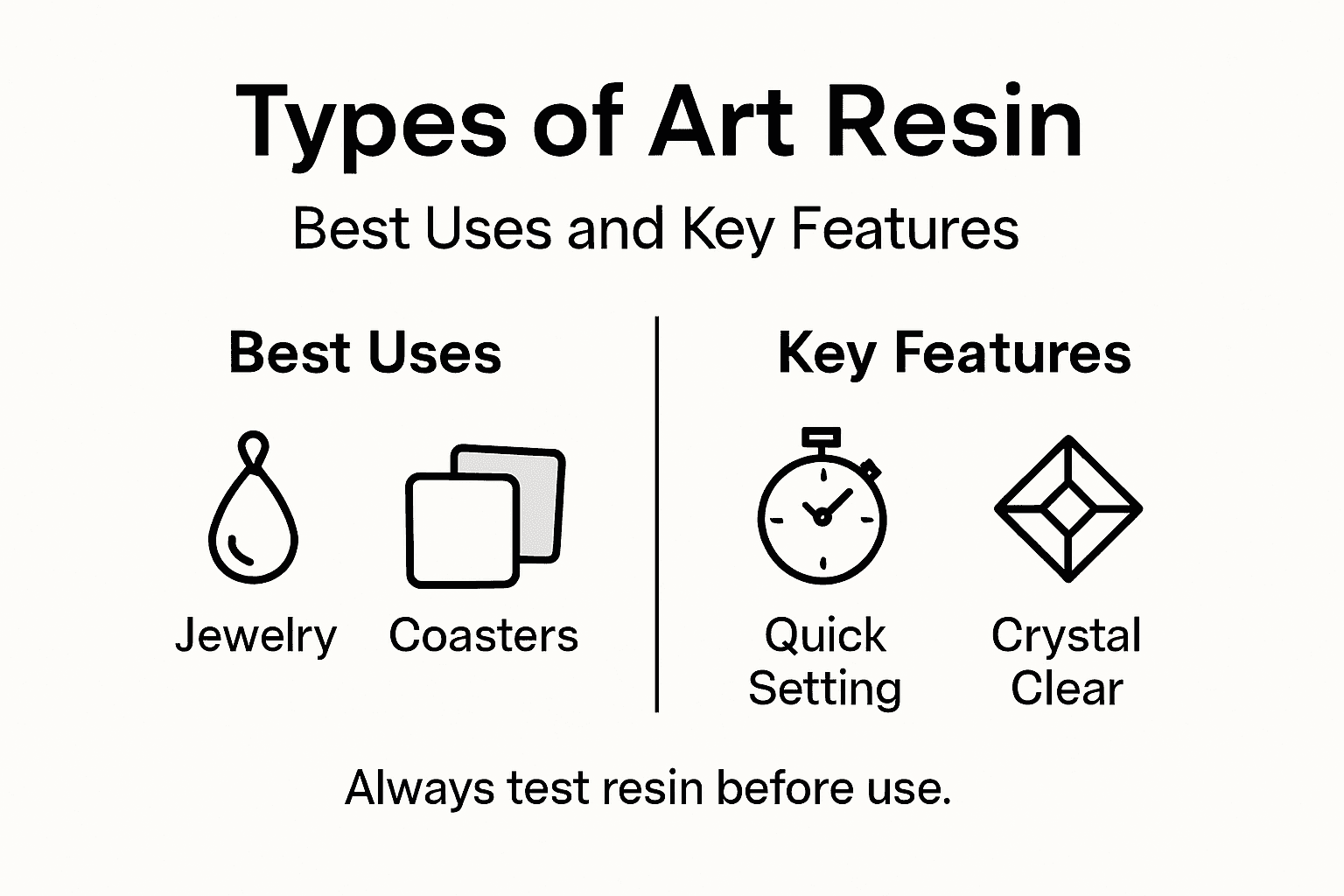
Here’s a concise comparison of major resin types for art projects:
Resin Type | Best Suited Projects | Key Advantages | Typical Drawbacks |
Epoxy | Jewelry, wall art | High clarity, strong bonding | Longer cure times |
Polyester | Fiberglass, outdoor decor | Rapid curing, affordable | Less clarity, odor issues |
Polyurethane | Sculpture, mold-making | Flexible, abrasion resistant | Can yellow over time |
UV Resin | Small crafts, precise items | Instant curing, smooth finish | Limited depth, costlier |
Pro tip: Always conduct a small test piece with a new resin type to understand its specific working characteristics and potential limitations before starting a major project.
Unique Visual Effects and Durability Features
Resin art transforms ordinary surfaces into extraordinary visual experiences, offering artists unprecedented creative possibilities. Stunning visual effects emerge through innovative techniques that leverage resin’s unique material properties.
The most remarkable characteristics of resin art include:
Exceptional Transparency
Glass-like clarity
Incredible depth perception
Ability to create three-dimensional illusions
Color Manipulation
Vibrant pigment integration
Enhanced color saturation
Layering for complex visual effects
Surface Durability
Waterproof protection
Scratch-resistant finish
Long-lasting artwork preservation
Dimensional layering represents a groundbreaking technique where artists can create intricate visual landscapes. By strategically embedding objects and manipulating color gradients, creators produce artworks that seem to breathe and move beneath their glossy surfaces.
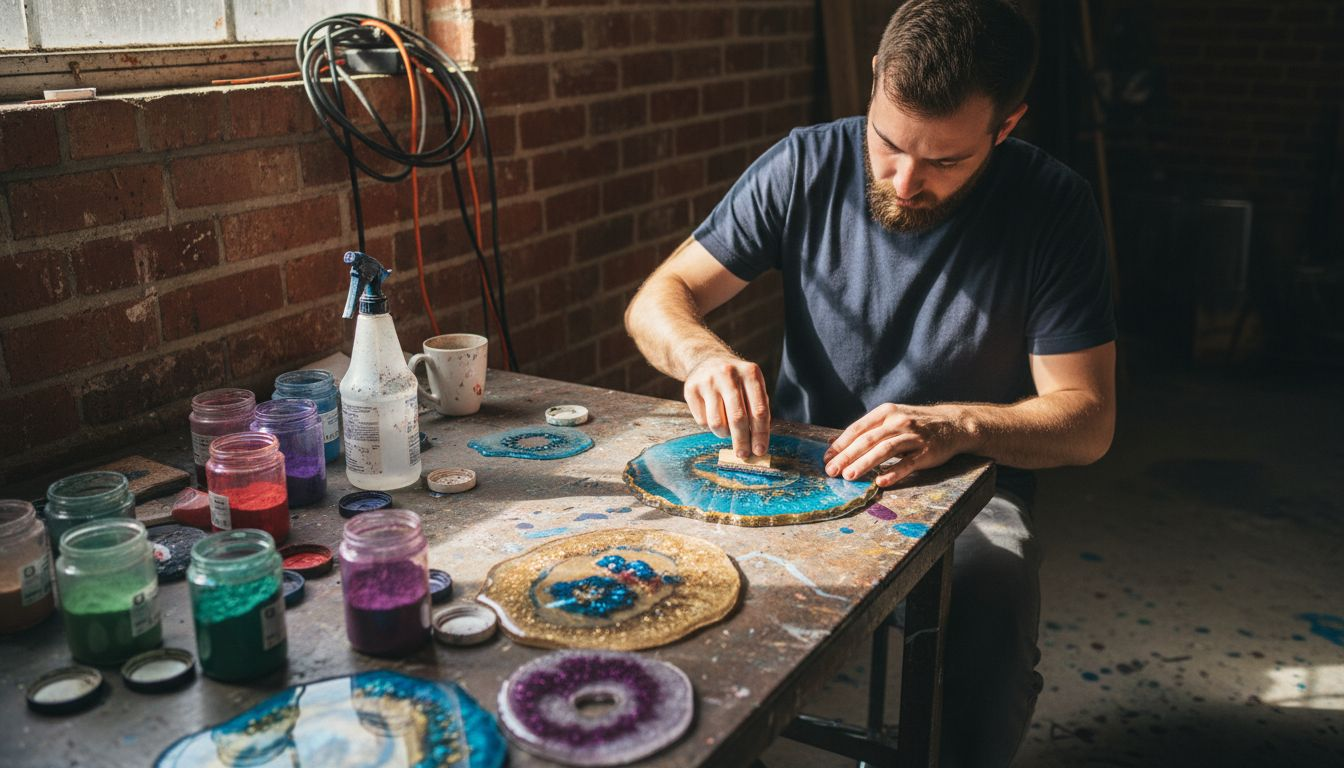
Resin artworks offer unparalleled versatility in artistic expression. The material’s unique chemical composition allows for remarkable durability, protecting artwork from environmental damage while maintaining vibrant colors and intricate details over extended periods.
Pro tip: Experiment with different pigment concentrations and layering techniques to discover unique visual effects that showcase resin’s extraordinary potential.
Safety Practices and Essential Handling Tips
Resin art demands careful attention to safety protocols to protect both the artist and the creative environment. Best practices for safe handling involve understanding potential health risks and implementing comprehensive protective measures.
Critical safety equipment for resin artists includes:
Personal Protective Gear
Nitrile gloves (chemical-resistant)
Safety goggles with side shields
Organic vapor respirator
Long-sleeved protective clothing
Workspace Preparation
Well-ventilated area
Non-porous work surface
Drop cloths or protective coverings
Dedicated workspace away from food preparation areas
Chemical Handling Precautions
Precise resin-to-hardener measurements
Careful mixing techniques
Proper chemical storage
Immediate cleanup of spills
Ventilation represents the most crucial aspect of resin safety. Working in an open, well-circulated space prevents dangerous fume accumulation and reduces potential respiratory risks associated with chemical exposure.
Understanding the specific properties of different resin types allows artists to adapt their safety protocols accordingly. Some resins require more stringent handling procedures, making it essential to read manufacturer instructions and Safety Data Sheets thoroughly before beginning any project.
The following table highlights safety priorities for resin art workspaces:
Safety Area | Why It’s Important | Recommended Actions |
Ventilation | Reduce harmful fume exposure | Use open windows or fans |
Protective Equipment | Prevent skin and eye contact | Wear gloves and goggles |
Chemical Handling | Avoid accidents and reactions | Measure and mix carefully |
Emergency Preparedness | Manage unexpected issues | Store first aid supplies |
Pro tip: Keep a dedicated first aid kit and chemical neutralization solution nearby when working with resin, and always work in a space with immediate access to running water for potential exposure incidents.
Comparing Resin With Traditional Art Materials
Resin art represents a revolutionary approach to creative expression, challenging traditional artistic mediums with its unique capabilities. Artistic mediums reveal distinct differences in technique, durability, and visual impact.
Key comparative characteristics include:
Surface Qualities
Resin: Glossy, transparent, three-dimensional
Traditional Painting: Textured, pigment-based, variable opacity
Creative Techniques
Resin: Object embedding, layering, rapid curing
Traditional Painting: Blending, brushwork, gradual drying
Durability and Preservation
Resin: Waterproof, UV-resistant, long-lasting
Traditional Painting: Potential fading, requires careful preservation
Material versatility sets resin apart from conventional art forms. Unlike oil, acrylic, or watercolor painting, resin allows artists to create multi-dimensional works that capture light and depth in unprecedented ways. The ability to embed objects, create intricate color gradients, and produce glass-like finishes offers creative possibilities beyond traditional painting techniques.
While traditional art forms carry historical significance and tactile richness, resin art provides a contemporary medium that combines technical innovation with artistic expression. Artists can now explore three-dimensional effects, transparency, and complex layering that were previously impossible with conventional materials.
Pro tip: Experiment with combining resin techniques with traditional painting methods to create hybrid artworks that leverage the strengths of both mediums.
Unleash Your Creative Vision with the Right Resin Supplies
The journey into resin art starts with understanding the versatility and challenges of working with different resin types as highlighted in the article. Whether you struggle with finding the perfect epoxy resin for jewelry making or need UV resin to speed up your small craft projects, having reliable, high-quality materials is the key to overcoming these hurdles. At Krystal Resin, we know how important clarity, curing time, and finish durability are to your artistic success. We provide a wide range of resin products, colorants, and molds designed to match your creative needs and help you achieve stunning effects every time.
Don’t let the complexity of resin art hold you back from realizing your unique creations. Visit Krystal Resin to explore our carefully curated selection of resins and accessories backed by fast shipping and expert support. Ready to transform your ideas into vibrant, durable masterpieces? Start your project today and experience the difference that premium materials make at Krystal Resin. Your next unforgettable artwork is just a click away.
Frequently Asked Questions
What is resin art and how does it differ from traditional art forms?
Resin art is a creative medium that uses liquid epoxy to create stunning, transparent artworks. Unlike traditional art forms such as painting, resin allows for multi-dimensional effects, object embedding, and glossy finishes, offering unique visual possibilities.
What are the main types of resin used in art, and what are their best applications?
The primary resin types include epoxy, polyester, polyurethane, and UV resin. Epoxy is excellent for jewelry and art pieces due to its clarity and strength. Polyester is cost-effective for fiberglass projects, polyurethane is flexible for sculptures, and UV resin cures quickly for intricate crafts.
How do I ensure safety when working with resin?
To ensure safety while working with resin, always wear personal protective gear such as gloves and goggles, work in a well-ventilated area, and follow proper chemical handling procedures. It’s important to read the manufacturer’s instructions and maintain a clean workspace to avoid accidents.
Can I combine resin art techniques with traditional painting methods?
Yes, combining resin techniques with traditional painting methods creates hybrid artworks that leverage the strengths of both mediums. Experimenting with layering, transparency, and texture can enhance the creative impact of your artwork.
Recommended
Comments