

What Is Epoxy Resin: Essential Facts for Artists
- Nima
- Jan 29
- 7 min read

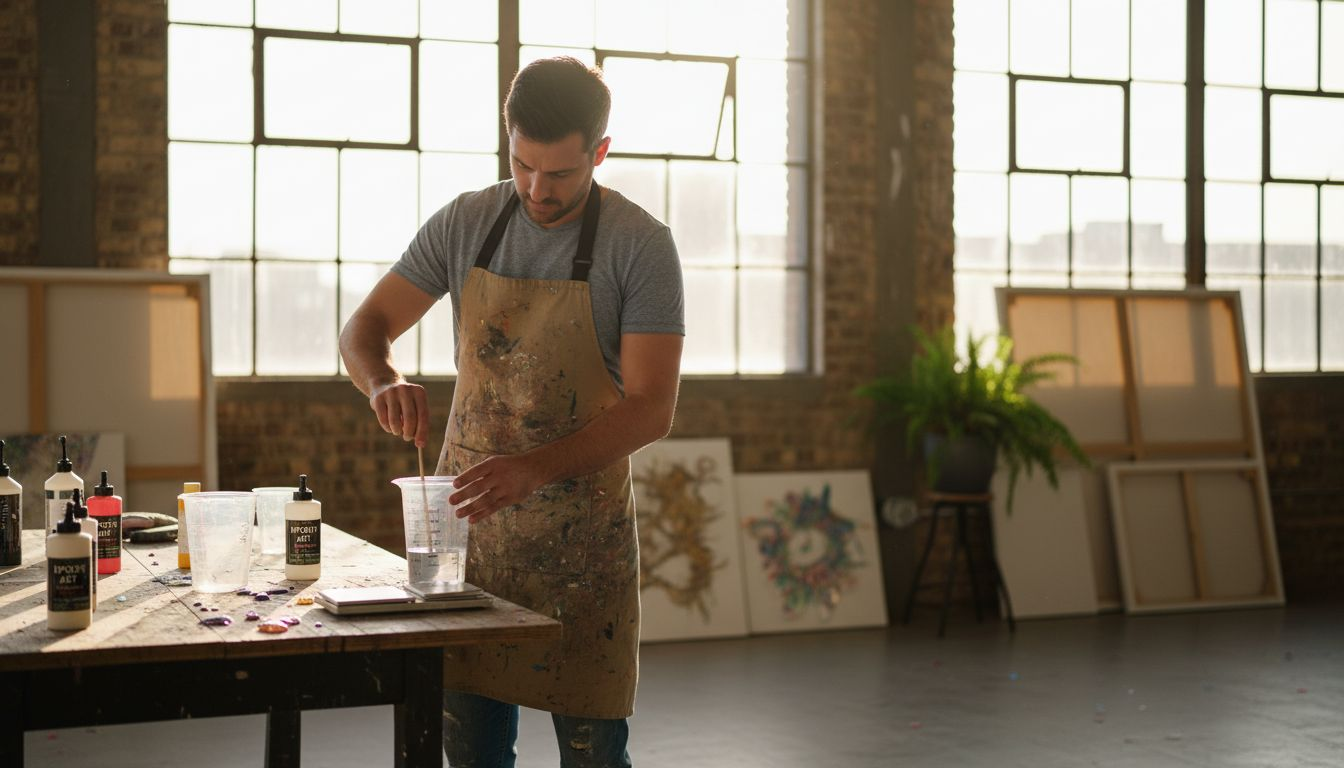
Many DIY artists in the United States and Canada face confusion when trying to choose the right epoxy resin for their creative projects. Misunderstandings about resin types and the complexity of the curing process often lead to costly mistakes and disappointing results. Clear knowledge of epoxy’s chemical structure and the diverse family of polymeric compounds available helps artists achieve strong, beautiful, and safe creations while tailoring materials to suit jewelry, coatings, or mixed media work.
Table of Contents
Key Takeaways
Point | Details |
Understanding Epoxy Resin | Epoxy resin is a complex family of materials with diverse applications, not just a single substance. It is crucial to understand its properties and curing process to achieve desired results. |
Types of Epoxy for Artists | Artists should choose the appropriate type of epoxy resin based on project needs, considering factors like heat resistance and clarity. Each type has unique advantages for specific applications. |
Curing Process Importance | The curing process is fundamental to epoxy resin’s performance; artists need to monitor conditions carefully to ensure optimal results. Precise mixing and timing are essential for achieving the desired properties. |
Safety First | Proper safety protocols are vital when working with epoxy resin to prevent health risks. Always wear personal protective equipment and ensure a well-ventilated workspace. |
Epoxy Resin Defined and Common Misconceptions
Epoxy resin is a versatile synthetic material with remarkable properties that goes far beyond simple craft supplies. At its core, epoxy is a reactive prepolymer containing epoxide groups capable of transforming into a durable, cross-linked polymer through a complex chemical process.
Understanding epoxy requires dispelling several widespread misconceptions. Many artists assume epoxy is a single, uniform substance, when in reality, it represents a diverse family of polymeric compounds. These materials vary significantly in chemical composition, mechanical properties, and potential applications.
Key characteristics of epoxy resin include:
High mechanical strength
Exceptional chemical resistance
Ability to bond with multiple surfaces
Versatility across different project types
Customizable curing properties
The most critical misunderstanding involves the curing process. Many believe epoxy is a simple mix-and-pour material, but it actually involves a sophisticated chemical reaction forming intricate polymer networks/18%3A_Ethers_and_Epoxides_Thiols_and_Sulfides/18.09%3A_Chemistry_MattersEpoxy_Resins_and_Adhesives). This reaction requires precise temperature, mixing ratios, and timing to achieve optimal results.
Pro tip: Always read manufacturer specifications and conduct small test projects to understand how specific epoxy resins behave in your unique artistic environment.
Types of Epoxy Resin for Creative Projects
Resin artists have multiple epoxy resin types to choose from, each designed for specific creative applications and artistic outcomes. Multiple epoxy classifications exist that cater to different project requirements, mechanical properties, and artistic techniques.
The primary epoxy resin categories for creative projects include:
Bisphenol A Epoxy: Most common type, excellent for general crafting
Novolac Epoxy: Superior heat resistance, ideal for specialized projects
Aliphatic Epoxy: Provides exceptional clarity and UV resistance
Glycidyl Ether Epoxy: Offers superior adhesion properties
Cycloaliphatic Epoxy: Delivers outstanding chemical resistance
Each epoxy type brings unique characteristics to artistic projects. Specific resin classifications specified by ASTM standards help artists select the most appropriate material for casting, coating, or creating intricate designs. Factors like flexibility, curing time, and mechanical strength play crucial roles in determining the right resin for a particular creative vision.
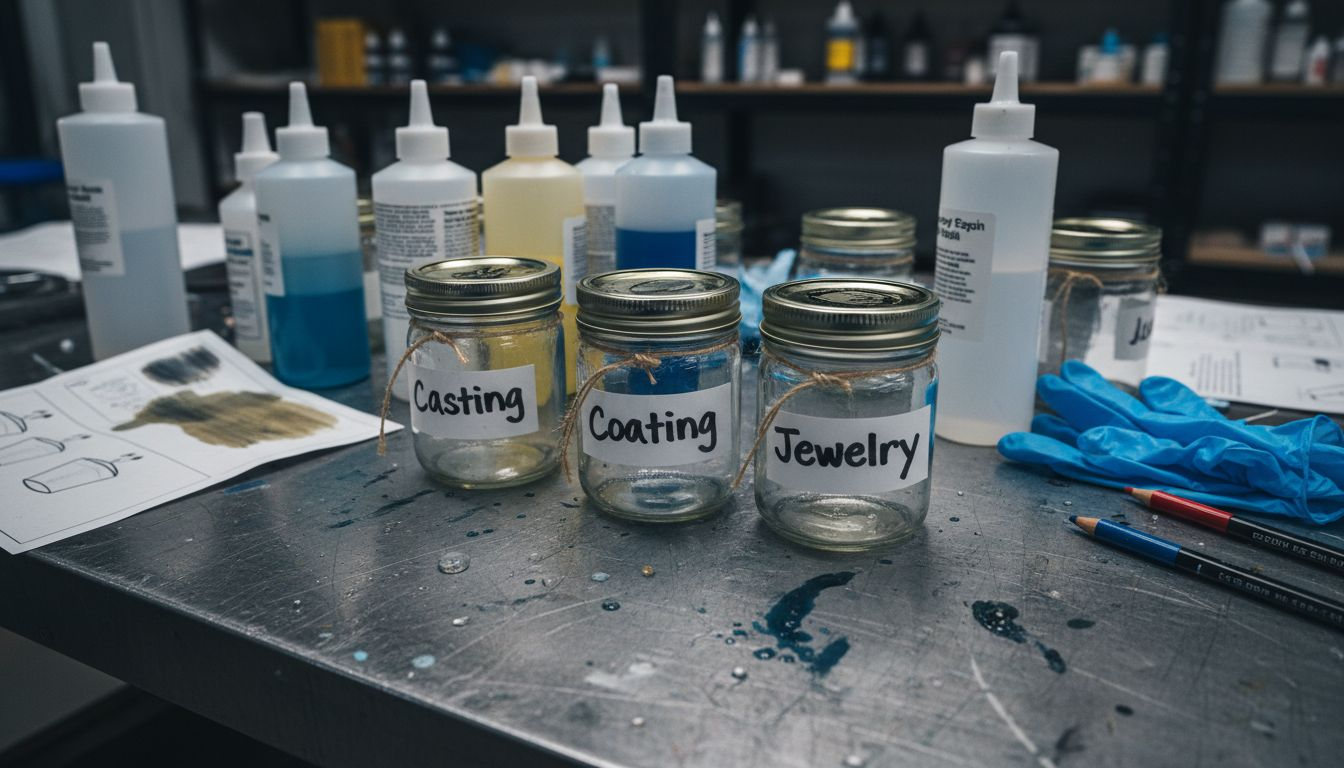
Understanding these variations allows artists to strategically select resins that match their specific project requirements. Some resins excel in jewelry making, while others are better suited for large-scale art installations or delicate sculptural work.
Here’s a quick comparison of epoxy resin types and their best artistic uses:
Epoxy Type | Best For | Key Advantage |
Bisphenol A Epoxy | General crafting, coatings | Reliable and affordable |
Novolac Epoxy | High-heat applications | Maximum heat resistance |
Aliphatic Epoxy | Jewelry, outdoor art | Superior UV stability |
Glycidyl Ether Epoxy | Bonding mixed materials | Strong adhesive strength |
Cycloaliphatic Epoxy | Chemical-resistant pieces | Outstanding durability |
Pro tip: Always conduct small test samples with different epoxy resin types to understand their unique working properties and visual characteristics before committing to a large project.
How Epoxy Resin Works: Curing and Properties
Epoxy resin transforms from a liquid to a solid through a fascinating chemical process called curing. Chemical reactions between epoxy monomers and hardeners create a complex three-dimensional molecular network that determines the material’s final performance characteristics.
The curing process involves several critical stages:
Mixing: Combining resin with a specific hardener
Initial Reaction: Molecular cross-linking begins
Gelation: Material transitions from liquid to semi-solid state
Full Cure: Complete molecular bonding occurs
Post-Cure: Optional additional heat treatment for maximum strength
Hardener selection dramatically impacts final polymer properties, with different chemical compounds like amines, anhydrides, and thiols producing unique molecular structures. The degree of cross-linking directly correlates with the resin’s mechanical strength, thermal conductivity, and chemical resistance.
Artists can manipulate curing conditions to achieve specific outcomes, such as adjusting temperature, humidity, and mixing ratios to control hardness, transparency, and overall material performance. Understanding these molecular interactions allows for precise control over artistic and functional properties.
Pro tip: Experiment with small test batches and document your curing conditions to develop a reliable, repeatable process for your specific creative projects.
Popular Applications in Art and Crafts
Artists and crafters have discovered extensive creative possibilities with epoxy resins, transforming ordinary materials into extraordinary artistic expressions. The material’s unique properties make it an incredibly versatile medium for numerous artistic disciplines.
Popular artistic applications include:
Jewelry Making: Creating intricate pendants and resin rings
Painting Enhancement: Applying glossy protective coatings
Sculptural Art: Casting three-dimensional objects
Furniture Design: Making decorative tables and countertops
Mixed Media Projects: Embedding objects and creating visual depth
Customization options allow artists to manipulate epoxy’s properties through pigments, additives, and fillers. Artists can achieve stunning visual effects by incorporating metallic powders, organic materials, and color variations that transform resin from a simple medium into a complex artistic tool.
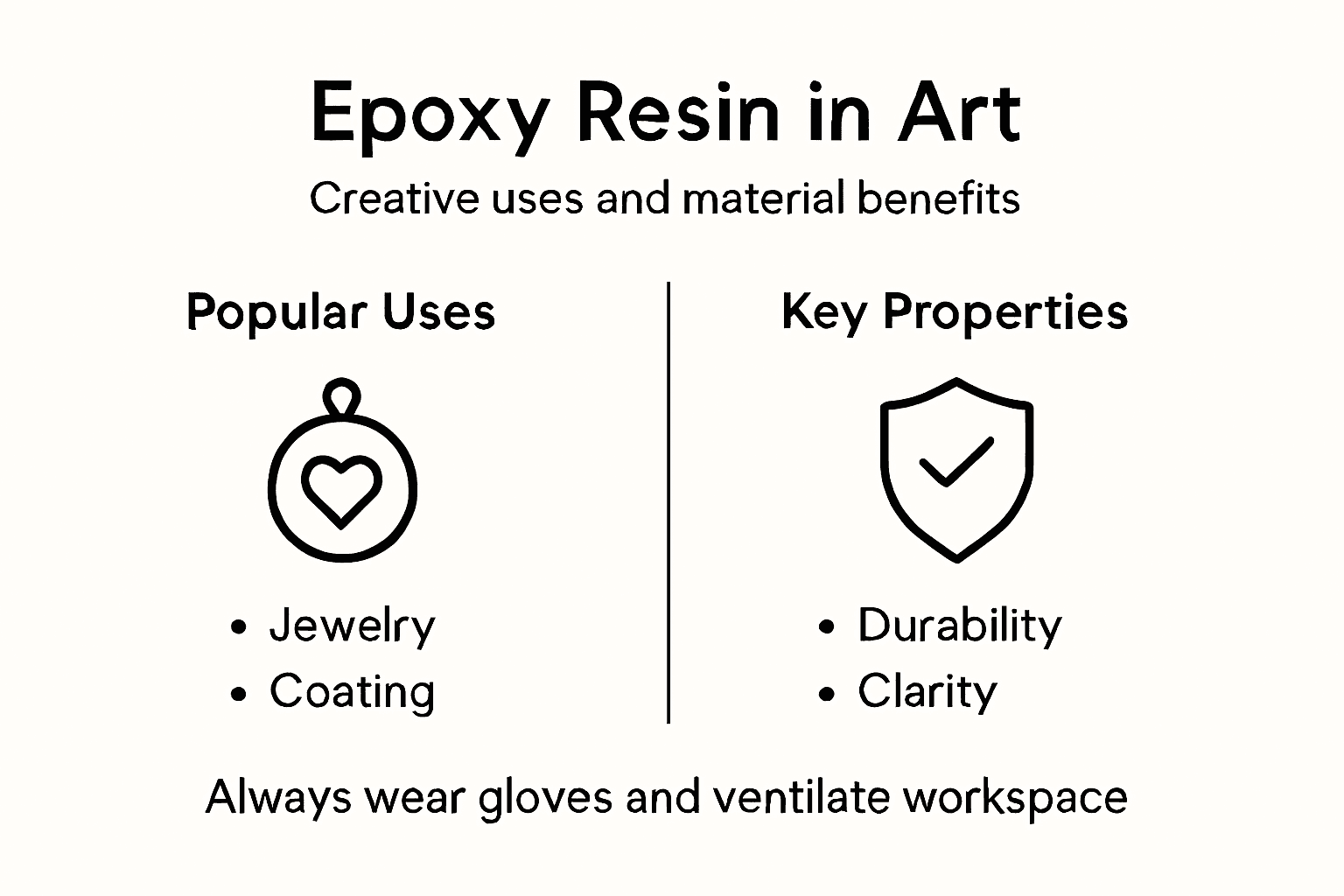
The durability and chemical resistance of epoxy make it particularly appealing for artists seeking long-lasting, professional-quality creations. Its ability to provide a crystal-clear, glossy finish enables unprecedented levels of detail and visual complexity in artistic works.
Pro tip: Always conduct small test samples with different pigments and embedding techniques to understand how various materials interact with epoxy before starting your main artistic project.
Risks, Safe Handling, and Common Mistakes
Epoxy resin crafting requires meticulous attention to safety protocols, as uncured components pose significant health risks. Artists must understand the potential hazards associated with these versatile materials to protect themselves and ensure successful creative projects.
Key safety considerations include:
Skin Protection: Wear nitrile gloves and long sleeves
Respiratory Safety: Use adequate ventilation and respirator masks
Eye Protection: Always wear safety glasses or goggles
Workspace Preparation: Work in well-ventilated areas
Chemical Handling: Avoid direct skin contact with uncured resin
Exposure to epoxy components can trigger serious health complications like skin sensitization, respiratory issues, and potential allergic reactions. Common mistakes artists make include improper mixing ratios, insufficient curing time, and neglecting personal protective equipment.
Artists must understand that proper safety isn’t just about protection—it’s about creating a sustainable and healthy creative environment. Implementing rigorous safety protocols ensures both personal well-being and the quality of artistic outcomes.
The following table outlines common resin mistakes and their effects:
Mistake | Likely Result | Prevention Tip |
Incorrect mixing ratio | Incomplete cure, tacky surface | Use precise digital scale |
Poor ventilation | Strong odor, health irritation | Work in open, airy space |
Skipping gloves or goggles | Skin/eye contact with chemicals | Always wear full protection |
Rushing the curing process | Weak or cloudy finished piece | Allow full cure time |
Pro tip: Invest in high-quality personal protective equipment and create a dedicated, well-ventilated workspace specifically for resin crafting to minimize potential health risks.
Unlock Your Creative Potential With the Right Epoxy Resin
Understanding epoxy resin and its curing process is the first step toward creating stunning and durable art pieces. If you have struggled with choosing the right resin type or achieving the perfect cure and finish for your projects, you are not alone. Many artists face challenges like improper mixing ratios, unclear curing instructions, and health safety concerns that can affect the quality and longevity of their work.
At Krystal Resin, we provide a wide selection of high-quality epoxy resins that cater to every artistic need—from jewelry making to large-scale sculptural pieces. Whether you want superior UV resistance, exceptional clarity, or strong adhesive properties, our crafted resin options empower you to bring your unique vision to life while ensuring reliability and safety.
Explore our premium products now and experience convenient shopping with fast shipping and expert support. Start your journey to flawless, professional-grade creations with trusted materials and advice at Krystal Resin. Don’t wait—perfect your craft with the right resin today.
Frequently Asked Questions
What is epoxy resin used for in art?
Epoxy resin is commonly used in various artistic applications, such as jewelry making, painting enhancement, sculptural art, furniture design, and mixed media projects.
How does the curing process of epoxy resin work?
The curing process involves mixing epoxy resin with a hardener, leading to a series of chemical reactions that transform the material from liquid to solid through cross-linking and gelation.
What types of epoxy resin are available for creative projects?
There are several types of epoxy resin, including Bisphenol A, Novolac, Aliphatic, Glycidyl Ether, and Cycloaliphatic resins, each with distinct properties suitable for different artistic applications.
What safety precautions should artists take when working with epoxy resin?
Artists should wear gloves and protective gear, ensure proper ventilation, avoid direct skin contact with uncured resin, and follow mixing ratios and curing times to avoid potential health risks.
Recommended
Comments