

Resin Types Explained: Choosing the Best for Art


Finding the ideal material for your next creative project often feels confusing when every option promises something different. For North American resin artists, knowing how resin transforms from liquid to durable plastic through a chemical reaction is the first step toward better results. Whether you want crystal-clear jewelry or resin-inlaid décor, understanding each resin type’s strengths empowers you to choose the right one for your goals and avoid common crafting mistakes.
Table of Contents
Key Takeaways
Point | Details |
Understanding Resin Types | Different resin types such as Epoxy, Polyester, Polyurethane, and UV have unique properties that affect project outcome and working time. Choose the right type based on your specific artistic needs and project goals. |
Safety Precautions | Always prioritize safety by using ventilation and wearing protective gear when working with resin. Familiarize yourself with the safety data sheet for the resin you are using. |
Mixing Ratios Matter | Precise mixing of resin and hardener is crucial for successful curing; incorrect ratios can lead to sticky or improperly cured pieces. Always follow the instructions specific to the product you are using. |
Planning Is Key | Take your time to understand the resin’s behavior, including cure times and working times, to effectively manage your creative process without rushing. |
What Is Resin and How It Works
Resin is a fascinating material that transforms from a liquid into a durable plastic through a chemical reaction. At its core, resin consists of two main components: a polymer base and a hardener or catalyst. When you mix these two parts together, they trigger a thermic reaction that causes the liquid to solidify into a plastic form. This process isn’t instantaneous, which is actually one of resin’s greatest advantages for artists. You get working time to pour, position, add colorants, embed objects, or manipulate the liquid before it hardens completely.
The journey of resin in creative applications is relatively recent. Epoxy resin gained popularity in the 1940s for industrial uses, but artists didn’t embrace it for creative work until much later. Today, resin has become a staple in North American craft studios for good reason. It’s valued for its versatility and resilience, meaning it can handle the wear and tear of jewelry, home décor pieces, or fine art installations. What makes resin particularly exciting for artists is its ability to be shaped using molds into virtually anything you can imagine. Whether you’re creating crystal-clear pendants, opaque decorative pieces, or translucent abstract forms, resin adapts to your vision.
The beauty of working with resin lies in understanding how its two components interact. The polymer base is essentially the foundation, while the hardener acts as the trigger that starts the curing process. Think of it like a chemical handshake between two compounds. Some resins cure faster than others, which affects how long you have to work with your piece and how quickly you can demold it. Understanding this chemistry isn’t necessary to create beautiful pieces, but knowing your specific resin’s behavior helps you plan projects more effectively. Different resin types cure at different speeds, have varying clarity levels, and respond differently to additives like pigments or mica powders. The right resin choice depends entirely on what you’re making and how much control you want during the creative process. When you’re buying resin online, you’ll notice various options available, each designed for specific artistic applications and working styles.
Pro tip: Always read your specific resin’s technical specifications before starting a project, as cure times, mixing ratios, and working times vary significantly between brands and resin types.
Popular Resin Types for Art and Crafts
Not all resins are created equal, and choosing the right type can make or break your project. The most common options available for North American artists fall into four main categories, each with distinct strengths and limitations. Understanding these differences helps you match the resin to your specific creative vision rather than settling for whatever’s on the shelf. The resin you select impacts everything from your working time to the final appearance and durability of your finished piece.
Epoxy resin stands out as the workhorse of the resin world. It’s favored for its exceptional durability, crystal-clear transparency, and superior adhesive strength, making it the go-to choice for jewelry, decorative coatings, and fine art applications. Epoxy bonds incredibly well to various surfaces and materials, which means you can embed objects like flowers, photographs, or metal components with confidence they’ll stay put. The downside is that epoxy requires precise mixing ratios and can be unforgiving if you don’t follow instructions carefully. Cure times typically range from 24 to 72 hours depending on the brand, which means you’ll need patience before demolding your work. Polyester resin offers a completely different experience. It cures much faster than epoxy, sometimes fully hardening in just a few hours, but comes with a strong chemical odor that requires excellent ventilation. It’s also more brittle than epoxy, so pieces made with polyester tend to be more prone to cracking under stress. Many crafters use polyester for casting applications where strength and speed matter more than crystal clarity. Polyurethane resin provides flexibility and impact resistance that neither epoxy nor polyester can match. This makes it ideal if you’re creating wearable art or pieces that might experience physical stress. However, polyurethane is less commonly stocked by retailers and tends to be pricier than other options.
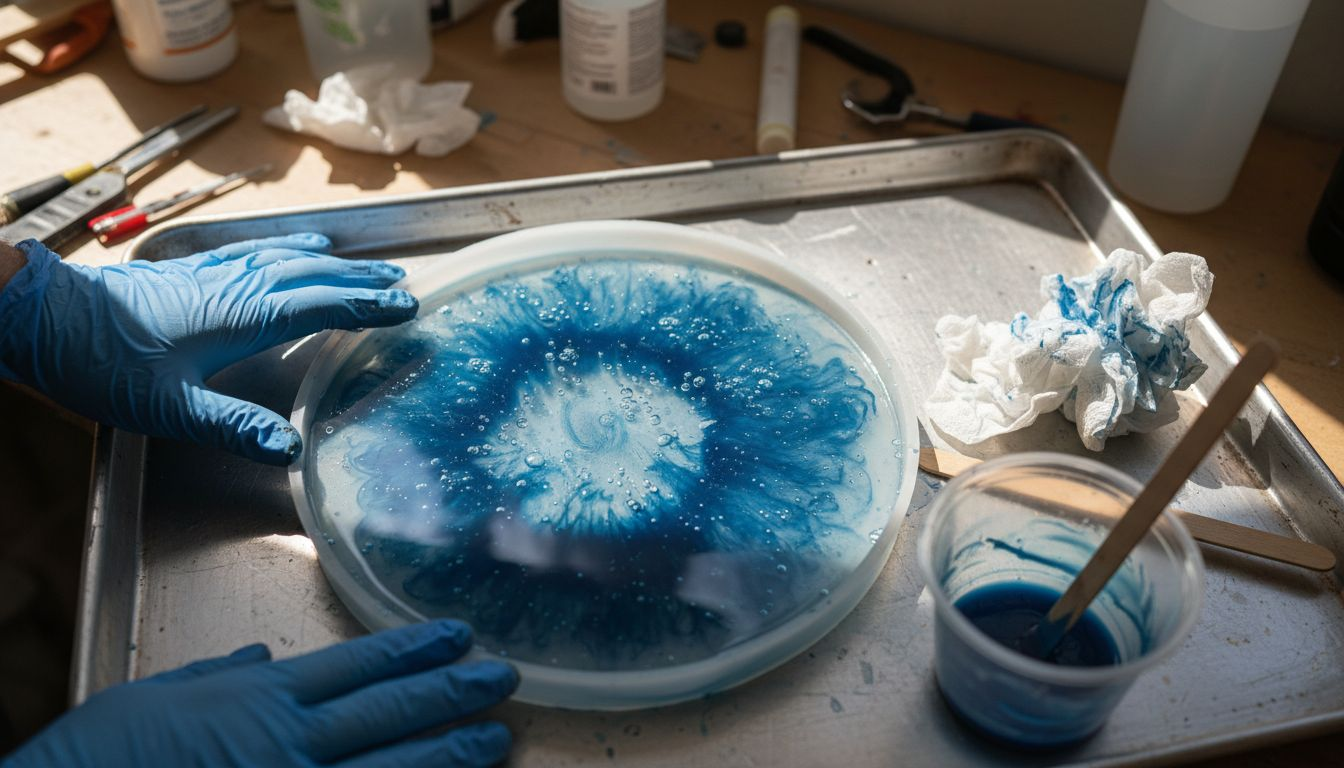
UV resin has revolutionized small-scale resin work over the past decade. UV resin cures rapidly under ultraviolet light, sometimes in just minutes, eliminating the waiting game entirely. This speed makes UV resin perfect for jewelry, inlays, and detailed accent work where you want instant gratification. The trade-off is that UV resin only works in thin layers because light can’t penetrate thick pours effectively. You’ll also need to invest in a UV lamp, which adds to the initial cost. UV resin typically produces a high-gloss finish and works beautifully with pigments and decorative elements embedded right on the surface.
Here’s a quick comparison to help you decide:
Epoxy resin: Best for large pours, jewelry, durability, and crystal clarity. Requires 24-72 hours to cure. Works well when you need superior bonding strength.
Polyester resin: Best for fast projects and strong casting. Cures in hours but has strong odor and can be brittle.
Polyurethane: Best for flexible pieces and items needing impact resistance. Less readily available and more expensive.
UV resin: Best for small detailed work, jewelry, and instant results. Limited to thin applications. Requires UV lamp.
Your project type determines which resin serves you best. Creating a massive river table? Epoxy handles that. Making dozens of small pendant charms? UV resin gets you finished faster. Casting sturdy molds for production work? Polyester might be your answer. The beauty of today’s resin market is that you have legitimate options tailored to different artistic needs and working styles.
Here’s a practical summary of what artists should consider when choosing a resin for different project goals:
Project Type | Recommended Resin | Key Advantage | Main Challenge |
Statement Furniture | Epoxy | Superior clarity and strength | Long cure time |
Quick Production Casting | Polyester | Fast hardening for batches | Strong odor, brittleness |
Small Jewelry Pieces | UV Resin | Instant curing, high gloss | Only works in thin layers |
Flexible Wearables | Polyurethane | Impact resistance and bendable | Expensive, less available |
This overview clarifies what each resin excels at for common creative applications.
Pro tip: Start with epoxy resin if you’re new to the craft, as it offers the most forgiving learning curve and works for the widest variety of projects.
Key Features of Epoxy, Polyester, and UV Resin
Each resin type brings its own personality to your creative work. Understanding the specific characteristics of epoxy, polyester, and UV resin helps you predict how your project will behave from mixing through curing to the final result. These aren’t just different brands of the same product. They’re fundamentally different chemical compounds with distinct properties that make them suited for different artistic goals. When you know what to expect from each type, you can confidently select the right material before you even pour the first drop.
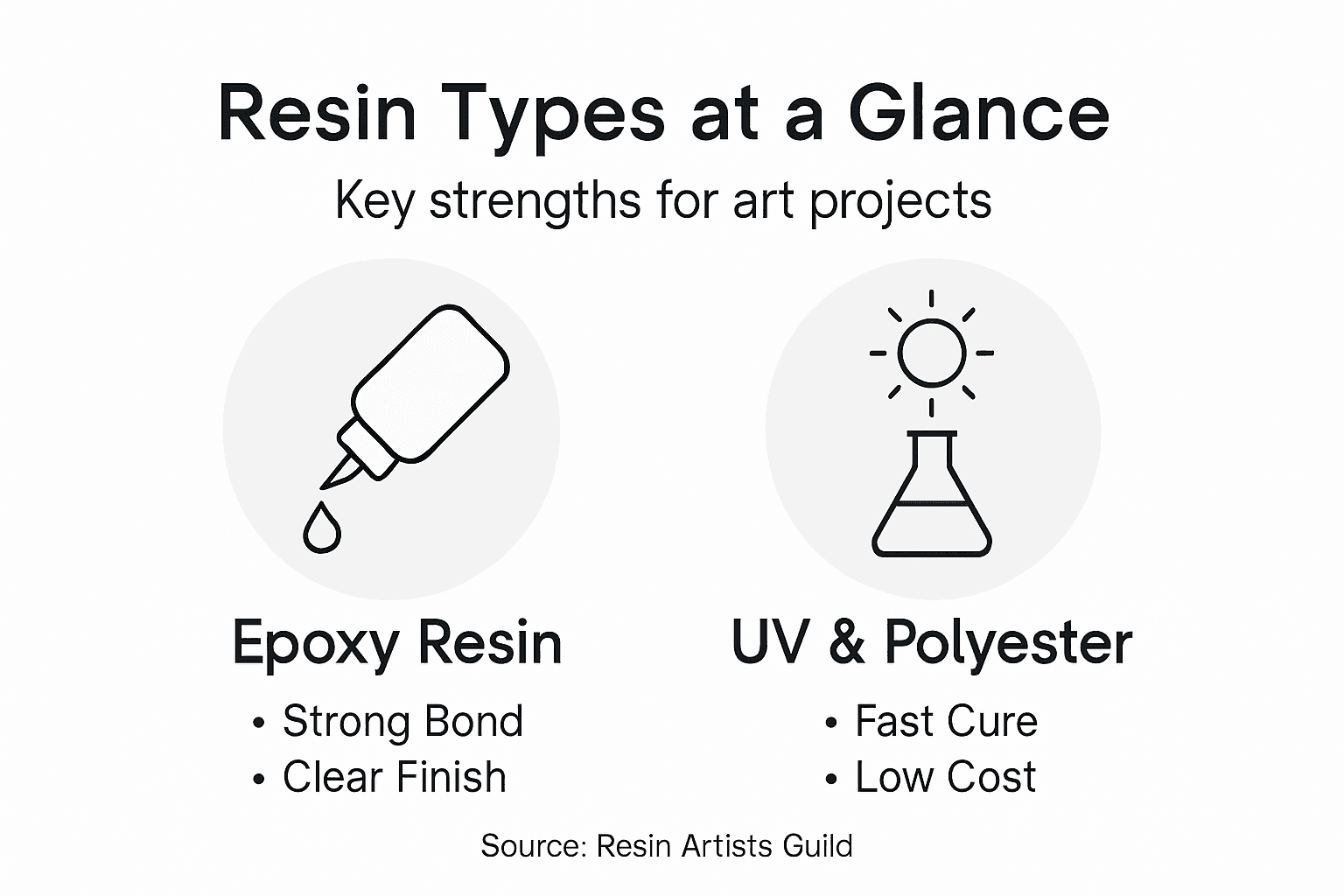
Epoxy resin stands as the gold standard for serious resin artists. Epoxy resins create a strong three-dimensional network/18%3A_Ethers_and_Epoxides_Thiols_and_Sulfides/18.09%3A_Chemistry_MattersEpoxy_Resins_and_Adhesives) through crosslinking, resulting in excellent mechanical strength, chemical resistance, and thermal stability. This means your finished pieces won’t yellow over time, won’t break easily under stress, and can handle temperature changes without degrading. Epoxy requires mixing two components in precise ratios, which is a small price for the reliability you get. The working time typically ranges from 20 minutes to several hours depending on the brand, giving you reasonable control over your pour. One thing beginners appreciate about epoxy is that it has low volatility, meaning you won’t experience the intense chemical smell that polyester resin produces. When you’re ready to buy epoxy, you’ll find options formulated for jewelry, casting, tabletop art, and industrial applications. The material can be tinted with pigments, filled with glitter or mica, or left crystal clear for maximum transparency. Epoxy also bonds exceptionally well to embedded objects, which is why it’s the preferred choice when you want to secure photos, flowers, or decorative elements permanently within the resin.
Polyester resin takes a different approach entirely. It cures significantly faster than epoxy, sometimes hardening completely in just 2 to 6 hours. If you’re impatient or working with tight deadlines, polyester’s speed is appealing. However, this speed comes with trade-offs. Polyester is noticeably more brittle than epoxy, meaning pieces are more prone to cracking under impact or stress. The adhesive strength is lower, so embedded objects might shift or separate over time. The chemical smell is also considerably stronger, requiring robust ventilation or an outdoor workspace. Polyester resin works well for casting applications where you need sturdy functional pieces quickly rather than fine art pieces meant to last decades. Many production-focused crafters favor polyester for this reason. Because polyester cures so fast, your working window is shorter, which means you need to work efficiently once you’ve mixed the components.
UV resin offers a completely different advantage: instant gratification. This resin polymerizes in minutes when exposed to ultraviolet light rather than taking hours or days to cure chemically. You need a UV lamp to activate the curing process, which is an upfront investment but pays off if you’re working on multiple small pieces. UV resin is ideal for jewelry, decorative inlays, and detailed accent work where precision matters. Because it cures without heat and cures so quickly, you can build layers on top of each other in the same session. The downside is that UV resin has lower strength compared to epoxy, and it only works in thin applications because UV light can’t penetrate thick pours. UV resin also tends to be pricier per ounce than either epoxy or polyester.
Here’s a quick feature breakdown:
Feature | Epoxy | Polyester | UV |
Cure time | 24 to 72 hours | 2 to 6 hours | 3 to 10 minutes |
Mechanical strength | Excellent | Good | Fair |
Chemical resistance | Excellent | Good | Fair |
Odor | Minimal | Strong | Minimal |
Working time | 20 min to several hours | 15 to 30 minutes | Instant |
Best for | Jewelry, art, durability | Fast production, casting | Small details, jewelry |
Equipment needed | Mixing tools | Mixing tools | UV lamp |
Pro tip: Test your chosen resin on scrap materials first to understand its specific working time and behavior, as products from different manufacturers can vary noticeably in performance even within the same resin category.
Applications of Resin in Jewelry and Decor
Resin has become the go-to material for North American makers who want to create jewelry and home décor pieces that look professionally crafted without years of training. The versatility of resin opens up possibilities that traditional materials simply can’t match. You can encapsulate flowers, photographs, and personal mementos inside crystal-clear pieces. You can tint resin with metallic pigments to create rose gold accents or holographic effects. You can pour it into intricate silicone molds and demolding a finished piece feels like unwrapping a present every single time. This combination of artistic freedom and accessibility has made resin the favorite medium for contemporary decorative arts.
Jewelry making is where resin truly shines. Epoxy resin dominates this space because its durability ensures your creations withstand daily wear without yellowing or becoming brittle. Pendants, earrings, rings, and bracelets all showcase what resin can do. Many artisans embed meaningful objects within their pieces: pressed flowers from a wedding, tiny shells collected from a beach vacation, or snippets of fabric with sentimental value. UV resin is favored for small detailed jewelry work such as inlays because its rapid curing time lets you work on multiple pieces in a single session without waiting hours between steps. The high-gloss finish UV resin produces is perfect for statement pieces that catch light beautifully. You can layer UV resin to create dimensional effects, embedding designs on the bottom layer and adding solid color on top for a sophisticated look. The precision and control you get with UV resin also means you can create intricate inlay work where colored resin fills carved or recessed areas of a base material.
Home décor applications showcase resin’s transformational power. Coasters become functional art when you embed decorative elements into clear resin. Wall hangings, catch-all dishes, and decorative boxes all benefit from resin’s durability and customizable aesthetic. Resin casting enables small-scale production of detailed and colorful pieces by filling molds with liquid resin that hardens into finished products. This low-cost method makes it feasible for hobbyists to create collections of matching pieces or try different color variations without massive material investment. Silicone molds are standard for this work because they’re flexible, affordable, and reusable for hundreds of castings. One particularly popular application involves creating river tables and wood resin combinations where turquoise or blue-tinted epoxy fills cracks in live-edge wood slabs, creating stunning statement pieces. This technique has become trendy in North American interior design, with crafters charging premium prices for pieces that combine natural wood with vibrant resin.
The customization possibilities are nearly limitless. You can mix in glitter, mica powder, dried herbs, or metallic flakes. You can create opaque pieces or crystal-clear ones. You can pour solid colors or create marble effects by swirling multiple colors together. Some artists add various additives to achieve specific effects or adjust working properties. You can also use negative space strategically. Hollow forms, carved sections, and carefully planned air pockets create visual interest and reduce material consumption.
Here’s what different resin applications demand:
Jewelry: Requires durability, clarity, and precision. Epoxy or UV resin work best. Working time matters less since pieces are small.
Coasters and functional décor: Requires durability and chemical resistance. Epoxy is ideal. Polyester works for budget-conscious makers.
Decorative casting: Works with any resin type. Silicone molds are essential. Epoxy provides longevity; polyester is faster.
Large statement pieces: Demands excellent clarity and strength. Epoxy only. Budget significant cure time.
Production runs: Benefits from polyester’s speed or UV resin’s instant curing depending on piece size.
Pro tip: Create a sample board with your chosen resin, pigments, and mold combination before committing to a full project, as color intensity and clarity can vary dramatically between batches and with different mold materials.
Risks, Safety, and Common Mistakes
Working with resin is rewarding, but it demands respect for the material and your own health. Resin isn’t toxic in the way poison is toxic, but uncured resin contains chemicals that can irritate skin, cause respiratory issues, and in some cases trigger allergic sensitization with repeated exposure. Many beginners underestimate these risks because they’ve successfully completed one or two projects without incident. That’s like saying you don’t need seatbelts because you haven’t crashed yet. The dangers are real, even if they’re not immediately obvious. Understanding what can go wrong and how to prevent problems protects both your health and your creative output.
Inhalation hazards are the most common concern. Both epoxy and polyester resins release volatile organic compounds (VOCs) as they cure, and you’re breathing these in while you work. Polyester resin is particularly notorious for its strong styrene smell, which is both unpleasant and a warning sign that you’re inhaling fumes. Epoxy releases fewer fumes, but they’re still present. Workers handling polymer materials face risks from inhalation of vapors and skin contact with uncured resins, which can cause sensitization and irritation. This means your lungs are being exposed to chemicals with every breath you take near an uncured resin project. Over time, repeated exposure can lead to sensitization, where your immune system becomes reactive to the resin compounds. Once sensitized, even minimal exposure triggers symptoms like headaches, nausea, or respiratory irritation. The solution is straightforward but non-negotiable: work in well-ventilated spaces. Open windows, use fans to direct fumes away from your face, or work outdoors whenever possible. If you’re in a basement or enclosed studio, a respirator with organic vapor cartridges is essential, not optional. Wearing a basic dust mask won’t protect you because these are vapor hazards, not particulate hazards.
Skin contact presents a different set of problems. Uncured resin can cause dermatitis or trigger allergic reactions, especially with repeated exposure. Some people develop contact sensitivity after months of working with resin without incident, then suddenly their hands break out in rashes. Gloves are your first line of defense. Nitrile gloves work, but latex or vinyl offer better protection against some resins. Change gloves frequently because resin can seep through after about 30 minutes of exposure. After you finish working, wash your hands thoroughly with soap and water. Don’t rely on solvents or acetone to clean your hands because these can actually increase skin irritation and help resin compounds penetrate deeper into your skin.
Fire hazards exist primarily with polyester resin, which contains flammable styrene. Unsaturated polyester resins contain flammable styrene and are classified as hazardous goods. Keep polyester resin away from ignition sources, heat, and sparks. Don’t work near open flames, smoking materials, or electrical equipment that might spark. Store polyester resin in cool areas away from direct sunlight. UV resin and epoxy present minimal fire risk during normal use.
Common beginner mistakes often stem from impatience or overconfidence:
Skipping the safety data sheet (SDS): Every resin product comes with an SDS that details specific hazards and safety measures for that exact product. Reading it takes 10 minutes and could save your health. Don’t assume all epoxies are identical.
Working without ventilation: This is the number-one mistake that experienced resin artists warn beginners about. Your studio might seem fine during your first project, but cumulative exposure matters.
Incorrect mixing ratios: Using wrong proportions of resin and hardener leads to incomplete curing, sticky residue, or pieces that never fully harden. Read your product instructions carefully. Different brands have different ratios.
Trapping air bubbles and ignoring them: Air bubbles trapped in resin create weak points and look unprofessional. Use a heat gun or torch to pop surface bubbles before the resin sets. Some bubbles are unavoidable, but most can be prevented with patience.
Demolding too early: Pulling your piece out of the mold before it’s fully cured causes distortion and breakage. Yes, waiting 72 hours for epoxy is frustrating. Do it anyway. Rushing costs you the entire project.
Not reading the room temperature requirements: Resin cures best at specific temperatures, usually between 65 and 75 degrees Fahrenheit. Cold environments slow curing dramatically. Hot environments can cause clouding or accelerated curing that traps bubbles.
Using the wrong molds: Non-silicone molds often stick to cured resin permanently. Silicone molds release easily. This single choice prevents hours of frustration.
Pro tip: Keep your safety data sheet printed and posted near your workspace, and review it before every project session to keep hazard awareness fresh in your mind.
Use this table as a handy reference for basic resin safety measures and potential hazards:
Hazard Type | Main Risk | Preventive Action | Critical Note |
Inhalation (VOCs) | Respiratory irritation | Use strong ventilation, respirator | Polyester resin fumes are severe |
Skin Contact | Dermatitis, allergy | Wear chemical-resistant gloves | Wash with soap and water only |
Fire Risk | Flammable vapors | Store away from heat, open flame | Polyester is most flammable |
Curing Failure | Sticky, weak pieces | Mix correctly, follow ratios | Use silicone molds for easy release |
This structured guide helps minimize mistakes and health risks for safer resin crafting.
Discover the Perfect Resin for Every Artistic Vision
Choosing the right resin can feel overwhelming with so many options like epoxy, polyester, polyurethane, and UV resin each offering unique benefits and challenges. This article breaks down those key differences to help you match resin type to your project, whether it is jewelry making, casting, or large sculptural pieces. But understanding resin types is just the start. The real challenge is sourcing high-quality materials that deliver consistent results and support your creative workflow.
At Krystal Resin, we specialize in providing a wide selection of premium resin products tailored for artists and crafters. From versatile epoxy resin kits perfect for durable clear finishes to fast-curing UV resins ideal for detailed jewelry work, we make it easy to find the exact resin that fits your needs. Our website offers straightforward shopping, free shipping on qualifying orders, and fast delivery from the U.S. warehouse ensuring your materials arrive quickly and ready to turn your resin art ideas into reality. Don’t let uncertain product quality or long waits slow your creative momentum. Visit Krystal Resin now to explore resin solutions built to empower every stage of your artistic journey.
Frequently Asked Questions
What are the main types of resin used in art and crafts?
The most common types of resin for art include epoxy resin, polyester resin, polyurethane resin, and UV resin. Each type has unique properties suited to different artistic applications.
How do I choose the right resin for my project?
Choosing the right resin depends on your project’s requirements. For example, use epoxy for durability and clarity in jewelry, polyester for quick casting, polyurethane for flexible pieces, and UV resin for small detailed work.
What are the advantages of using epoxy resin compared to polyester resin?
Epoxy resin offers superior clarity, durability, and resistance to yellowing, making it ideal for long-lasting projects. Polyester resin, while fast-curing, can be more brittle and has a strong odor, requiring more ventilation when used.
Can I use UV resin for larger projects?
UV resin is not recommended for large pours since it cures only in thin layers under UV light. It’s best suited for small, detailed pieces where rapid curing is beneficial.
Recommended
Comments