

Role of Resin Additives: Elevating Art Durability


Finding the perfect balance of durability and style is a challenge every American resin artist faces. With over 90 percent of professional creators relying on specialized additives, choosing the right enhancements can mean the difference between ordinary outcomes and exceptional work. Understanding how these tiny but powerful substances shape resin properties gives artists a clear advantage for achieving stronger, longer-lasting, and visually stunning pieces.
Table of Contents
Key Takeaways
Point | Details |
Importance of Resin Additives | Resin additives enhance performance characteristics like strength and durability, allowing for precise customization in artistic projects. |
Diverse Categories | Additives serve functional and aesthetic purposes, including fillers for strength, colorants for visual appeal, and stabilizers for longevity. |
Safe Handling Practices | Proper safety measures, including protective equipment and workspace ventilation, are essential for mitigating health risks associated with resin use. |
Common Mistakes | Understanding additive compatibility and maintaining controlled workspace conditions are critical to avoiding project failures and achieving desired results. |
What Resin Additives Are and Why They Matter
Resin additives are specialized substances designed to transform and enhance base resin materials, dramatically improving their performance characteristics. These microscopic molecular engineers fundamentally alter how resins behave, enabling artists and manufacturers to customize material properties with remarkable precision. By strategically incorporating additives, creators can dramatically expand the functional potential of their resin projects.
At their core, resin additives serve critical performance modification functions, including improving mechanical strength, flexibility, durability, and processing capabilities. Though they represent a small percentage of the total resin composition, these substances deliver outsized impact. Artists and craftspeople can leverage additives to achieve specific outcomes like increased UV resistance, enhanced color stability, improved scratch resistance, and superior thermal performance.
The diversity of resin additives is remarkable. Some categories focus on functional modifications, while others target aesthetic transformations. Processing aids help manufacturers work more efficiently, stabilizers prevent degradation, and aesthetic modifiers allow for stunning visual effects. Compositional additives can suppress emissions, modify viscosity, and provide fire retardancy, making them invaluable across multiple creative and industrial applications.
Pro tip: When selecting resin additives, always test small quantities first to understand how they interact with your specific resin type and project requirements.
Major Types of Resin Additives for Artists
Resin artists have access to a diverse array of additives that can transform their creative projects, each serving unique functional and aesthetic purposes. Mechanical enhancement additives like fillers represent a critical category, with materials such as talc, silica, and glass fibers strategically incorporated to improve structural integrity, strength, and overall performance of resin artworks.
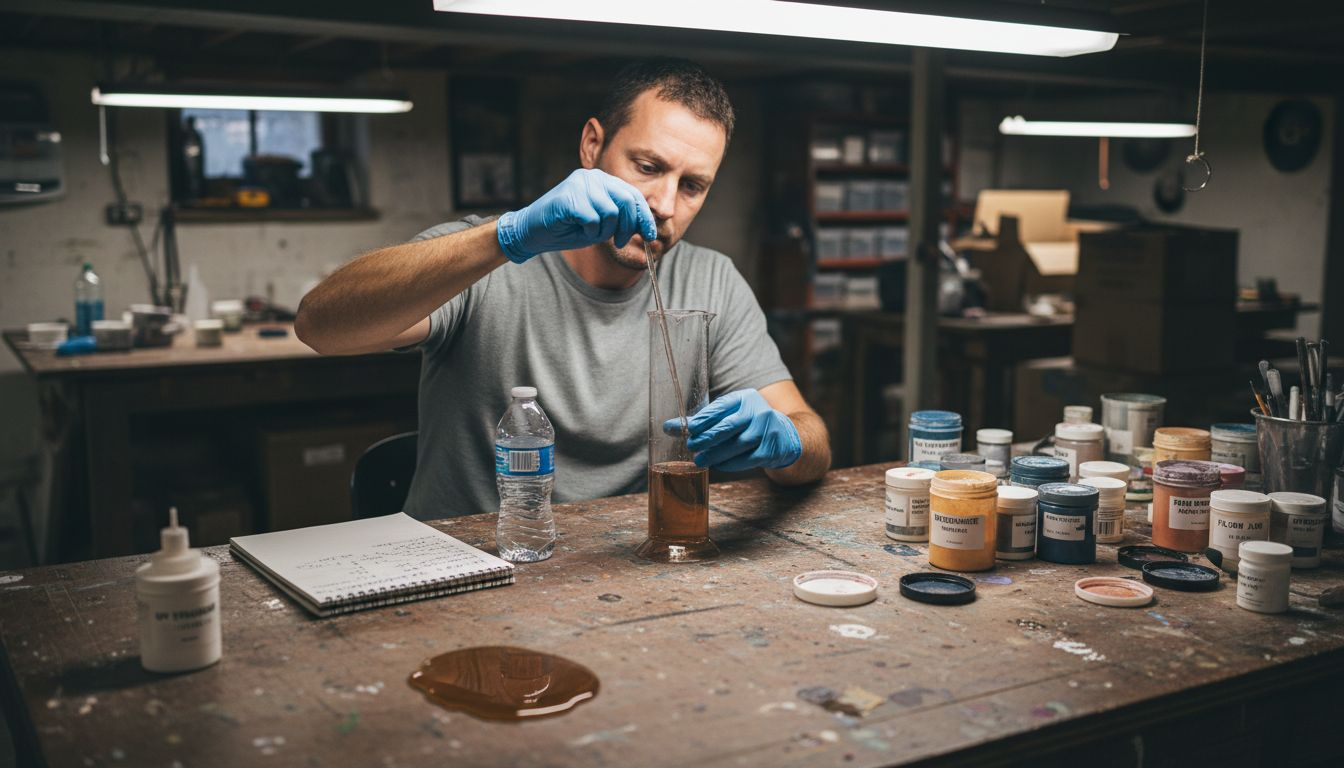
Colorants and aesthetic modifiers constitute another essential group of additives. Artists can choose from an expansive palette including powder pigments, liquid dyes, mica powders, and specialized effect additives like glow-in-the-dark particles. Artistic colorants provide remarkable visual transformations, allowing creators to achieve everything from subtle translucent tints to bold, vibrant color statements.
Beyond visual modifications, functional additives play crucial roles in resin project durability and processability. Accelerators and retarders control curing times, plasticizers increase flexibility, and UV stabilizers protect against environmental degradation. These sophisticated molecular compounds enable artists to fine-tune their resin’s performance characteristics, extending the lifespan and resilience of their creative works.
Pro tip: Always purchase colorants and additives specifically designed for resin work to ensure optimal compatibility and prevent unexpected chemical reactions.
Here’s a comparison of popular resin additive categories and their impact on artistic projects:
Additive Type | Main Function | Typical Benefits | Common Artistic Uses |
Fillers | Mechanical enhancement | Increased strength, texture | Sculptures, river tables |
Colorants | Aesthetic modification | Vivid colors, special effects | Jewelry, wall art |
Accelerators | Curing time control | Faster project completion | Rapid prototyping, batch work |
UV Stabilizers | Environmental defense | Longer-lasting color, durability | Outdoor artworks, decor |
How Additives Change Resin Properties
Polymer additive technologies fundamentally transform resin characteristics by strategically modifying their molecular composition. These microscopic interventions allow artists and manufacturers to engineer precise performance attributes, enabling remarkable control over material properties that extend far beyond the base resin’s original capabilities.
The mechanisms of property modification are complex and multifaceted. Additives can dramatically enhance mechanical strength, thermal stability, electrical conductivity, and environmental resistance. Antioxidants and stabilizing compounds play critical roles in preventing oxidative breakdown, increasing the longevity of resin projects by protecting against UV radiation, heat exposure, and potential chemical degradation.
Concentration and selection of additives represent a delicate scientific balance. While these molecular enhancers can significantly improve resin performance, excessive or improperly matched additives may actually compromise material integrity. Artists must understand that each additive introduces unique interactions within the resin’s molecular structure, potentially altering flexibility, toughness, flame retardancy, and overall aesthetic characteristics.
Pro tip: Conduct small test batches with different additive concentrations to understand their precise impact on your specific resin type and artistic project requirements.
Creative Applications in Resin Art Projects
Resin art’s versatility transforms ordinary materials into extraordinary artistic expressions, pushing creative boundaries across multiple disciplines. Artists leverage resin’s unique properties to craft everything from intricate jewelry pieces to large-scale decorative installations, utilizing advanced additive technologies to manipulate transparency, color, and structural integrity.
The creative potential of resin spans numerous artistic domains. Jewelry makers exploit resin’s ability to capture delicate elements like flowers, insects, or metallic inclusions, creating wearable art with remarkable depth and permanence. Home decor artists develop stunning river tables, wall hangings, and sculptural pieces that blend aesthetic sophistication with functional durability, using pigments and fillers to achieve complex visual textures and color gradients.
Advanced resin techniques have expanded into professional design fields, including architectural elements, custom furniture, and specialized artistic interventions. Designers and artists can now embed photographs, create three-dimensional layered compositions, and produce objects with glass-like transparency or deliberately organic, translucent effects. The molecular flexibility of resin additives allows for unprecedented creative experimentation, enabling artists to push traditional material limitations.
Pro tip: Experiment with small resin sample panels to test different additive combinations and understand how they interact before committing to larger, more complex art projects.
Risks, Safe Handling, and Best Practices
Resin safety protocols are critical for protecting artists and craftspeople from potential health hazards associated with chemical exposure. Working with resin requires a comprehensive understanding of potential risks, including volatile organic compounds (VOCs), skin irritants, and potential respiratory challenges that can emerge during artistic processes.
Personal protective equipment forms the first line of defense in resin handling. Artists must invest in high-quality nitrile gloves, safety goggles, and respiratory protection designed to filter chemical vapors. Fluoropolymer handling guidelines emphasize the importance of creating a controlled workspace with proper ventilation, minimizing dust and fume exposure, and maintaining strict hygiene practices to prevent unintended chemical interactions.
Environmental considerations and responsible disposal represent another crucial aspect of resin safety. Artists should establish dedicated work areas with easy-to-clean surfaces, use drop cloths, maintain material safety data sheets for all products, and implement careful waste management strategies. Understanding the potential environmental impact of resin additives and developing systematic approaches to their handling can significantly mitigate potential risks.
Pro tip: Create a dedicated safety station with all protective equipment, cleaning supplies, and emergency contact information readily accessible before starting any resin project.
This table summarizes key resin safety practices for artists:
Safety Practice | Why It Matters | Best Approach |
Personal protection | Prevents skin and vapor exposure | Use gloves, goggles, respirators |
Workspace ventilation | Reduces fume and dust risks | Open windows, use exhaust fans |
Safe disposal | Minimizes environmental impact | Follow local chemical guidelines |
Hygiene and organization | Avoids accidental contamination | Clean tools, maintain MSDS sheets |
Common Mistakes and What to Avoid
Resin printing errors frequently stem from overlooking critical preparation and technique details that can dramatically impact project outcomes. Artists and creators must understand that seemingly minor oversights can lead to significant material waste, compromised aesthetic quality, and potentially costly project failures.
Additive selection represents a complex challenge where precision matters exponentially. Filler additive compatibility requires meticulous attention to matching base resin types, controlling concentration levels, and ensuring thorough material dispersion. Incorrect filler selection can result in surface defects, reduced mechanical strength, and unpredictable material behaviors that undermine artistic intentions.
Workspace conditions and equipment calibration play pivotal roles in preventing resin art mishaps. Temperature control, surface preparation, mixing techniques, and understanding specific resin characteristics are fundamental. Artists must develop systematic approaches to material handling, carefully monitor environmental variables, and create controlled workspaces that minimize potential contamination or unexpected chemical interactions.
Pro tip: Maintain a detailed project journal documenting resin type, additive combinations, environmental conditions, and outcomes to systematically improve your technique and understand material interactions.
Elevate Your Resin Art with the Right Additives and Supplies
Understanding how resin additives enhance strength, durability, and aesthetics is essential to avoid common pitfalls and ensure your projects last. If you want to master the balance between creativity and performance, having reliable access to quality resin products and compatible additives is key. Whether you need vibrant colorants, UV stabilizers, or mechanical fillers, the right materials can transform your artistic vision into lasting works.
Start creating resin art that stands the test of time today by exploring our wide selection at Krystal Resin. From carefully curated additives to specialized resins, we provide everything you need backed by quick shipping and expert support. Visit Krystal Resin now to find your perfect resin companion and take your projects to the next level. Don’t wait to turn your ideas into durable, beautiful creations with confidence.
Frequently Asked Questions
What are resin additives and why are they important?
Resin additives are specialized substances that enhance and modify the performance characteristics of base resin materials. They improve attributes like mechanical strength, flexibility, durability, and processing capabilities, enabling artists to create customized resin projects with improved functionality and aesthetics.
How do different types of resin additives affect my art projects?
Different types of resin additives, such as fillers, colorants, accelerators, and UV stabilizers, each serve unique purposes. Fillers enhance mechanical strength, colorants provide visual modifications, accelerators control curing time, and UV stabilizers protect against environmental degradation. Understanding these functions helps artists select the right additives for specific needs.
What are the best practices for using resin additives in my projects?
Best practices include conducting small test batches to understand how additives interact with your specific resin type, choosing products specifically designed for resin work, and carefully measuring additive concentrations to ensure compatibility and desired outcomes in your projects.
How can I ensure safe handling of resin and its additives?
To ensure safe handling, always wear personal protective equipment like nitrile gloves and safety goggles, work in a well-ventilated area, and follow strict hygiene practices. It’s also important to have proper waste management strategies for disposing of resin materials and to maintain material safety data sheets for all chemicals used.
Recommended
Comments