

Types of Resin for Artisans: Choosing the Perfect Match
- Nima
- Jan 15
- 7 min read


Artists across American and Canadian studios know that choosing the right resin can make or break a creative project. Research shows over 80 percent of American DIY artisans report higher satisfaction when they understand the differences between resin types before starting their work. Exploring how resin’s properties influence clarity, strength, and finish helps makers craft jewelry, décor, and sculptures with precision and confidence.
Table of Contents
Key Takeaways
Point | Details |
Understanding Resin Properties | Artists should be aware that resin typically consists of a base and hardener, and precise mixing ratios are crucial for proper curing. |
Choosing the Right Resin Type | Selecting between Epoxy, Polyester, and UV Resins is essential, depending on project requirements like desired finish and curing time. |
Safety First | Proper ventilation, protective gear, and attention to health risks are necessary to ensure safe resin working conditions. |
Avoiding Common Mistakes | To prevent project failures, artists must accurately measure resin components and maintain a well-ventilated workspace during use. |
Defining Resin for Artistic Projects
Resin represents a versatile liquid polymer that transforms artistic vision into tangible, durable creations. Chemically composed of carbon and hydrogen, resin acts as a dynamic medium that enables artists to capture intricate details and preserve complex designs with remarkable precision.
At its core, resin functions as a binding agent that integrates various artistic elements into a cohesive whole. A matrix material for artistic expression, it allows creators to suspend pigments, embed objects, and generate transparent or opaque structures with exceptional clarity and strength. Artists can manipulate its properties to achieve stunning visual effects ranging from crystal-clear castings to richly textured surfaces.
Understanding resin requires recognizing its fundamental characteristics. Typically, artistic resins are two-part systems involving a base resin and a hardener that chemically react when mixed. This reaction triggers a transformation from liquid to solid state, enabling artists to create jewelry, sculptures, decorative objects, and functional art pieces. The curing process can be influenced by factors like temperature, mixing ratio, and additives, giving artists significant control over their final product.
Pro Tip: Always mix resin components precisely and work in a well-ventilated space to ensure optimal artistic results and personal safety.
Comparing Popular Resin Types for Artisans
Artisans navigate a diverse landscape of resin options, each offering unique characteristics for creative projects. Epoxy, polyester, polyurethane, casting, and art resin represent the primary categories that provide artists with versatile material choices for transforming artistic concepts into tangible works.
Epoxy resin stands out as a premier choice for many artists, prized for its exceptional clarity, robust UV resistance, and remarkable versatility. Its ability to capture intricate details and create glass-like finishes makes it ideal for jewelry, decorative objects, and complex artistic compositions. Polyester resin offers a budget-friendly alternative, though artists must carefully manage its strong fumes and potential workspace ventilation requirements. Polyurethane resin provides increased flexibility and faster curing times, making it particularly attractive for projects requiring quick turnaround and dynamic material properties.
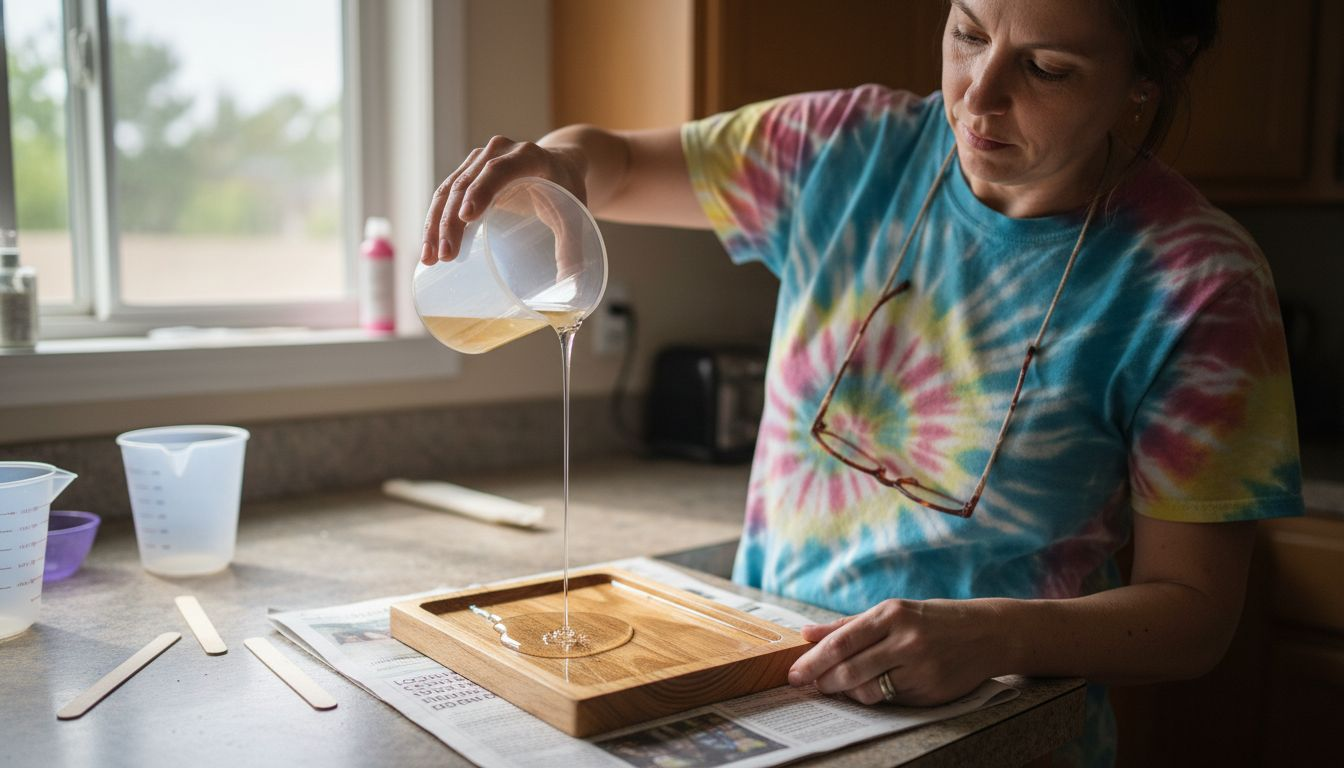
Casting resin emerges as a specialized type designed for creating three-dimensional objects with smooth, detailed surfaces. Its low viscosity allows artists to pour intricate molds and capture minute design elements with precision. Art resin, specifically formulated for creative applications, delivers a high-gloss finish with superior UV protection, ensuring artwork maintains its vibrant appearance and structural integrity over time. Artists can select their ideal resin by considering factors like project complexity, desired finish, curing time, and specific aesthetic requirements.
Pro Tip: Test small resin samples with your specific project materials before committing to a full-scale artwork to understand compatibility and achieve optimal results.
Here’s a summary comparing the main resin types used in artistic projects:
Resin Type | Best Use Cases | Key Advantages | Major Drawbacks |
Epoxy | Jewelry, décor, sculpture | Excellent clarity, UV stable | Long cure time, costlier |
Polyester | Budget décor, sculpture | Fast curing, affordable | Strong odor, more brittle |
Polyurethane | Rapid molds, flexible art | Quick curing, flexible | Can yellow, sensitive to moisture |
UV Resin | Small jewelry, detail art | Instant cure, high detail | Limited thickness, UV lamp needed |
Art Resin | Paintings, high-gloss art | Vibrant gloss, stable color | Limited structural strength |
Key Properties of Epoxy, Polyester, and UV Resin
Resin artisans must understand the distinctive characteristics of different resin types to select the optimal material for their creative projects. Epoxy, polyester, and UV resins each offer unique properties that dramatically impact artistic outcomes and workflow.
Epoxy resin emerges as a powerhouse material, renowned for its exceptional clarity, strong adhesive properties, and remarkable durability. Its robust UV resistance makes it ideal for projects requiring long-term color preservation and structural integrity. Artists appreciate epoxy’s ability to create glass-like finishes with incredible detail capture, making it perfect for intricate jewelry, detailed sculptures, and high-end decorative pieces. The material’s versatility allows for deep pour capabilities and excellent compatibility with various pigments and inclusions, enabling complex artistic expressions.
Polyester and UV resins present alternative options with their own distinct advantages. Polyester resin offers rapid curing times and cost-effectiveness but comes with significant trade-offs, including strong chemical odors and a tendency toward brittleness. UV resin provides an innovative solution for artists seeking instant gratification, curing within seconds under ultraviolet light. This characteristic makes it particularly attractive for small-scale projects like jewelry making, where quick production and precise detailing are paramount. Each resin type demands careful consideration of project requirements, workspace conditions, and desired aesthetic outcomes.
Pro Tip: Invest in high-quality ventilation equipment and protective gear when working with different resin types to ensure both creative success and personal safety.
Best Resin Choices for Jewelry and Décor
Creating stunning jewelry and decorative pieces requires selecting the right resin that balances aesthetic appeal with long-lasting durability. Art resin and epoxy resins excel in jewelry crafting by offering exceptional clarity, remarkable UV resistance, and the ability to capture intricate design elements with stunning precision.
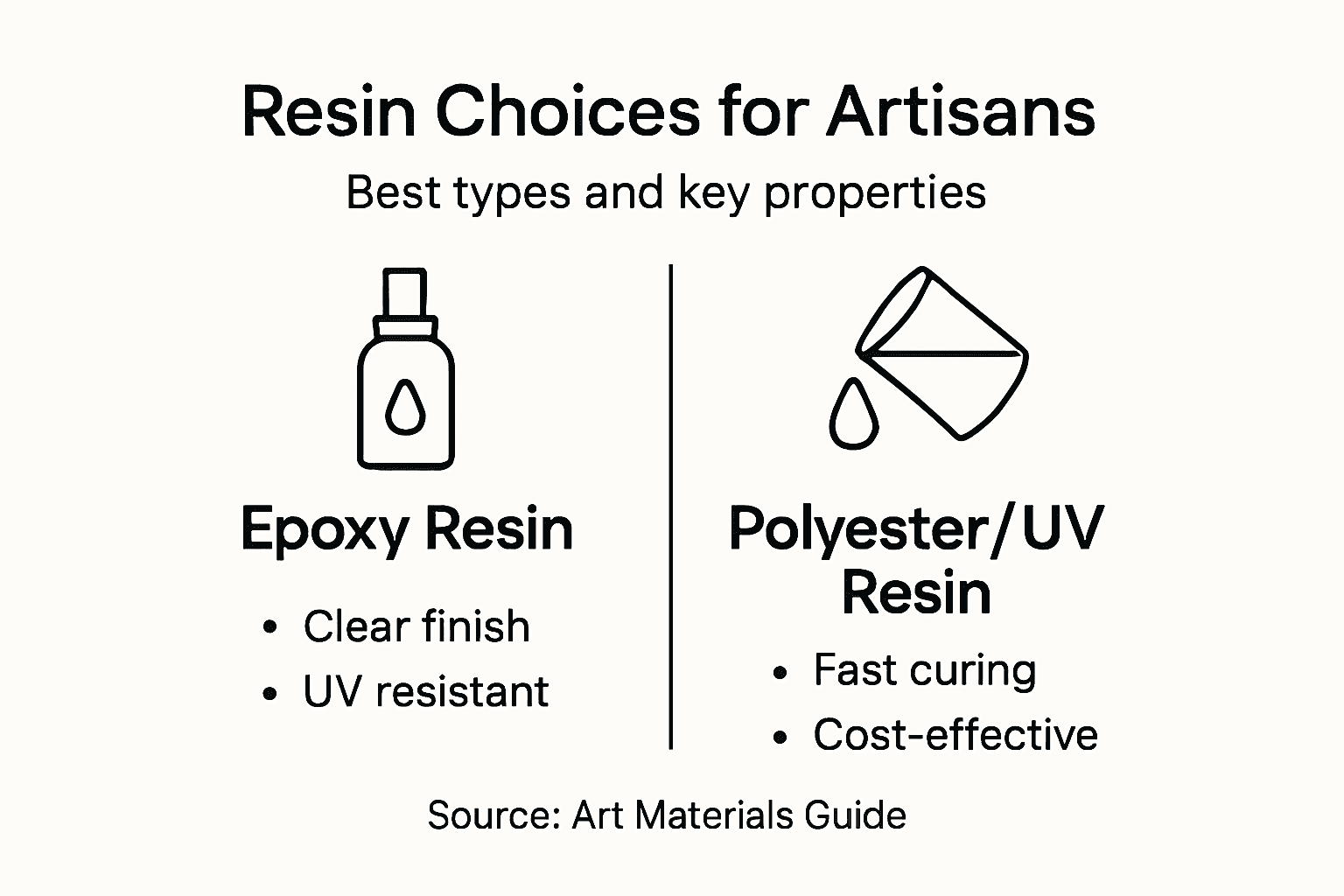
Epoxy resin stands as the gold standard for jewelry makers and décor artists seeking a professional-grade material. Its crystal-clear transparency allows for stunning visual depth, enabling artisans to create pieces that showcase embedded objects, intricate color gradients, and complex layering techniques. The material’s high-gloss finish provides a luxurious sheen that remains vibrant and resistant to yellowing, making it ideal for statement jewelry pieces, delicate pendants, and intricate home décor items that demand both beauty and structural integrity.
Casting resin presents another excellent option for artists focused on detailed work, particularly in creating complex three-dimensional jewelry and decorative elements. Its low viscosity allows for exceptional detail reproduction, enabling artisans to capture microscopic textures and design nuances that elevate their creative work. When selecting a resin, artists must consider factors beyond visual appeal, including cure time, mechanical strength, and compatibility with pigments and inclusions. The right resin transforms raw materials into wearable art and captivating decorative pieces that tell a unique artistic story.
Pro Tip: Always conduct small test pours with your chosen resin to understand its specific working characteristics and potential interactions with your design materials.
Common Resin Mistakes and Safety Concerns
Resin artistry demands precision and careful attention to both technique and personal safety. Common mistakes can compromise project quality and artist health, making it critical to understand potential pitfalls before beginning any creative endeavor.
Mixing ratios represent one of the most significant challenges for resin artists. Inaccurate proportions between resin and hardener can result in incomplete curing, leading to soft, tacky surfaces that never fully solidify. Soft spots and improper curing not only ruin artistic projects but can also create structural weaknesses that compromise the integrity of jewelry, sculptures, and decorative pieces. Artists must use precise measuring tools and follow manufacturer instructions meticulously, often using digital scales to ensure exact component ratios.
Safety concerns in resin work extend far beyond technical execution. Volatile organic compounds (VOCs) present significant health risks, necessitating comprehensive protective strategies. Proper ventilation, high-quality respirators, nitrile gloves, and protective eyewear are essential for preventing skin contact and respiratory exposure. Working in well-ventilated spaces, using fans to circulate air, and creating dedicated workspace zones can dramatically reduce potential health hazards associated with resin processing.
Here are common resin artistry mistakes and ways to prevent them:
Common Mistake | Impact on Project | Prevention Tip |
Incorrect mixing ratio | Tacky or uncured surface | Use digital scale for accuracy |
Poor ventilation | Health risk, headaches | Set up exhaust fans, open windows |
Inadequate protection | Skin irritation, allergy | Always wear gloves and eyewear |
Pro Tip: Keep a dedicated set of protective gear for resin work, and never use those items for other tasks to prevent cross-contamination and potential chemical transfer.
Discover the Right Resin for Your Artistic Vision Today
Choosing the perfect resin can feel overwhelming with so many options like epoxy, polyester, and art resin, each presenting unique benefits and challenges. If you have struggled with issues like improper curing, unclear finishes, or selecting the best resin for jewelry and décor projects, you are not alone. Precision in mixing, UV resistance, and finish quality matter deeply to artisans who want lasting, beautiful work.
At Krystal Resin, we understand these challenges and offer carefully curated resin products tailored for artists and craft enthusiasts. Whether you need crystal-clear epoxy for intricate jewelry or fast-curing resin for rapid molds, our selection supports your creative goals. Shop our extensive range of high-quality resin types and supplies designed to help you achieve flawless results every time.
Start creating with confidence by exploring our premium collection today. Get the perfect match for your next project with Krystal Resin. Find the resin type that fits your craft needs and enjoy fast shipping and exceptional customer support designed just for artists like you. Visit Krystal Resin now and turn your artistic ideas into stunning realities.
Frequently Asked Questions
What are the main types of resin used in artistic projects?
The primary types of resin include epoxy, polyester, polyurethane, casting, and art resin. Each has unique properties that cater to different artistic needs and project requirements.
How does epoxy resin differ from polyester resin?
Epoxy resin is renowned for its exceptional clarity, UV resistance, and durability, making it suitable for intricate designs. In contrast, polyester resin offers rapid curing times and is more budget-friendly but has strong fumes and tends to be more brittle.
What should I consider when choosing a resin for jewelry making?
When selecting a resin for jewelry, consider factors such as clarity, UV resistance, curing time, and its ability to capture intricate details. Epoxy and art resins are typically the best choices for their high-gloss finishes and structural integrity.
How can I ensure safe handling of resin materials during my projects?
To ensure safe handling of resin, work in a well-ventilated area, use high-quality respirators, and wear protective gloves and eyewear. Additionally, measure resin components accurately to prevent health risks and project failures.
Recommended
Comments