

What Are Resin Molds: Essential Facts for Creators
- Nima
- Jan 27
- 9 min read

Finding the perfect resin mold can feel like hunting for a needle in a haystack, especially when every project demands different qualities. Every resin artist and DIY maker across North America knows the frustration of sticky demolds, warped shapes, or wasted supplies. Whether you are crafting American-inspired jewelry or unique home décor, understanding the differences between silicone and rigid molds, plus the most enduring and compatible materials, will help you create flawless pieces every time.
Table of Contents
Key Takeaways
Point | Details |
Understanding Mold Types | Choose between flexible silicone molds for intricate designs and rigid molds for consistent shapes based on your project needs. |
Mold Longevity | Quality molds can endure many uses; silicone molds may last 50-100+ castings, making for worthwhile investments. |
Preparation is Essential | Always use mold release spray to prevent sticking and damage, ensuring successful demolding. |
Test Before Committing | Start with a single affordable mold to confirm compatibility with your resin before investing in larger quantities. |
Defining Resin Molds and Common Misconceptions
A resin mold is a cavity or container designed to hold liquid resin while it hardens into a specific shape. Think of it as a negative impression that becomes your finished piece once the resin sets. When you pour resin into the mold, gravity and surface tension work together to fill every corner, creating a detailed replica of the mold’s interior.
The most common misconception is that all molds work the same way. They don’t. Silicone molds offer flexibility and fantastic undercut details, while plastic molds provide affordability and durability for repeated castings. Epoxy resin molds suit different projects than polyester ones. Assuming one mold type works universally costs creators time, money, and frustration.
Many beginners believe molds are one-time purchases. Actually, quality molds last through dozens of castings when properly maintained. A well-cared silicone mold can produce 50-100+ copies before showing wear. This longevity makes the initial investment worthwhile, especially when you understand the role molds play in transforming your resin art projects.
Another false belief is that expensive molds automatically produce better results. Price reflects material quality and design intricacy, but a $15 mold can yield professional-looking pieces just as easily as a $50 one. What matters is matching the mold material to your resin type and project requirements.
People also assume molds require no preparation before use. Reality check: mold release spray is essential. Without it, even silicone can stick stubbornly to cured resin, damaging both your piece and the mold. First-time failures often stem from skipping this simple step.
Pro tip: Start with a single high-quality silicone mold in a simple shape like a pendant or small geometric form to master your pouring technique before investing in complex mold collections.
Major Types of Resin Molds and Their Uses
Resin molds split into two main categories that shape how your projects turn out. Flexible silicone molds and rigid molds each serve different purposes, and knowing which to use makes the difference between frustration and success.
Silicone molds are the workhorses of jewelry and detailed art projects. Their flexibility lets you capture intricate details without worrying about undercuts catching during demolding. When you need to release a delicate pendant with fine texture or an ornamental piece with lots of small features, silicone performs beautifully. These molds typically last through 50-100+ castings, making them a solid long-term investment for any serious resin artist.

Rigid molds come in plastic, metal, or rigid urethane formulations. They maintain exact dimensions suitable for larger production runs where you need repeatable precision. If you’re casting geometric shapes, consistent sized pieces for a product line, or larger resin items, rigid molds excel. The tradeoff is that demolding requires more care since the mold won’t flex to help release your finished piece. Understanding flexible silicone molds versus rigid molds helps you pick the right tool for your specific needs.
Beyond material type, molds vary by intended use. Pendant molds, ring molds, and coaster molds each come pre-sized for their purpose. Specialty molds like sphere halves, cube molds, or geometric shapes open up design possibilities. You’ll also find practical examples showing how different mold types work for various creative projects.
The compatibility question matters too. Not every mold works with every resin type. Some epoxy resins interact differently with mold materials than polyester or UV resins do. Checking mold specifications before purchase saves headaches later.
Here’s a quick comparison of resin mold types and their best uses:
Mold Type | Key Benefits | Typical Uses | Longevity |
Flexible Silicone | Captures fine details, easy demolding | Jewelry, pendants, intricate art | 50-100+ castings |
Rigid Plastic | Precise shapes, supports production runs | Coasters, geometric decor, batch items | 20-50 castings |
Metal | Maintains shape under heat, long-term durability | Large objects, industrial projects | 100+ castings |
Pro tip: Match silicone molds to intricate jewelry designs and rigid molds to production pieces or geometric shapes, then verify resin-to-mold compatibility before your first pour.
What Makes Quality Resin Molds Work Well
Quality resin molds boil down to three core factors: superior material properties, flawless manufacturing, and compatibility with your specific resin. When these elements align, you get consistent results that make creating a pleasure instead of a gamble.
The material itself matters tremendously. Dimensional stability means your mold keeps its exact shape through dozens of castings without warping or shrinking. A quality silicone mold won’t stretch out of shape after 30 pours. A rigid mold won’t develop micro cracks that trap resin. This stability translates directly to pieces that match your design every single time.
Manufacturing precision separates good molds from problematic ones. During production, quality control prevents bubbles trapped in the mold material, uncured spots that weaken structure, and surface imperfections that transfer to your finished pieces. When manufacturers carefully control mold properties and avoid manufacturing defects, you avoid common frustrations like sticky demolding or warped castings.
Resin compatibility is your secret weapon. Quality mold makers test their products with multiple resin types to ensure chemical harmony. Epoxy, polyester, and UV resins behave differently in various molds. A well-designed mold manages the exothermic heat generated during curing, preventing temperature-related stress that can crack both mold and piece. This compatibility prevents yellowing, sticking, or incomplete curing.
Durability separates investment pieces from one-time purchases. Quality molds survive 50-100+ uses without deteriorating. They handle the stress of repeated pouring, demold cycles, and occasional accidents. When following proper resin casting workflows, quality molds reward careful technique with flawless results year after year.
Pro tip: Buy molds from suppliers who provide material specifications and resin compatibility charts, as this transparency indicates manufacturing confidence and helps you avoid costly compatibility mistakes.
Use this summary table to identify factors that influence resin mold quality:
Quality Factor | Why It Matters | Tip for Artists |
Dimensional Stability | Prevents warping after many uses | Store flat and away from heat |
Manufacturing Precision | Reduces surface flaws on pieces | Buy from reputable suppliers |
Resin Compatibility | Avoids sticking and defects | Match resin to mold material |
Durability | Extends mold investment value | Inspect for wear after uses |
Safety, Cleaning, and Longevity Tips
Proper mold care extends lifespan and keeps your workspace safe. A well-maintained mold outlasts neglected ones by years, saving you money and frustration. Start by understanding what you’re working with and treating it accordingly.
Safety comes first. Always wear nitrile gloves when handling resin and molds. Some resins contain chemicals that irritate skin or cause allergic reactions. Work in a ventilated space, as resin fumes build up quickly in enclosed areas. Never pour resin near open flames or heat sources, as some types are flammable. If you’re using epoxy resins, follow safety protocols for exothermic curing reactions that generate heat during hardening.
Cleaning molds immediately after use prevents resin from hardening inside. While resin is still tacky, wipe excess material with paper towels or old cloths. For stubborn spots, use rubbing alcohol on a soft brush. Never use acetone or harsh solvents on silicone molds, as they degrade the material. For rigid molds, you have more flexibility with cleaning agents.
Storage matters more than you’d think. Keep molds in a cool, dry place away from direct sunlight. UV exposure yellows and weakens silicone over time. Store molds flat or upright, never folded or twisted. Tuck them into sealed containers to protect from dust and humidity. Check your molds before each use for any visible damage or degradation.
Prevent common problems with simple practices. Always use mold release spray before pouring. This single step prevents sticky demolding that can tear molds or damage pieces. Inspect molds monthly for signs of wear like discoloration, brittleness, or texture changes. Replace molds showing significant degradation to avoid casting failures.
Pro tip: Store cleaned molds in individual ziplock bags with a desiccant packet to eliminate moisture, which extends silicone mold lifespan by preventing mildew and material breakdown.
Comparing Alternatives: Choosing the Right Mold
Choosing between mold types requires matching your project needs to mold capabilities. The wrong choice wastes money and creates frustration. The right decision turns your vision into reality smoothly.
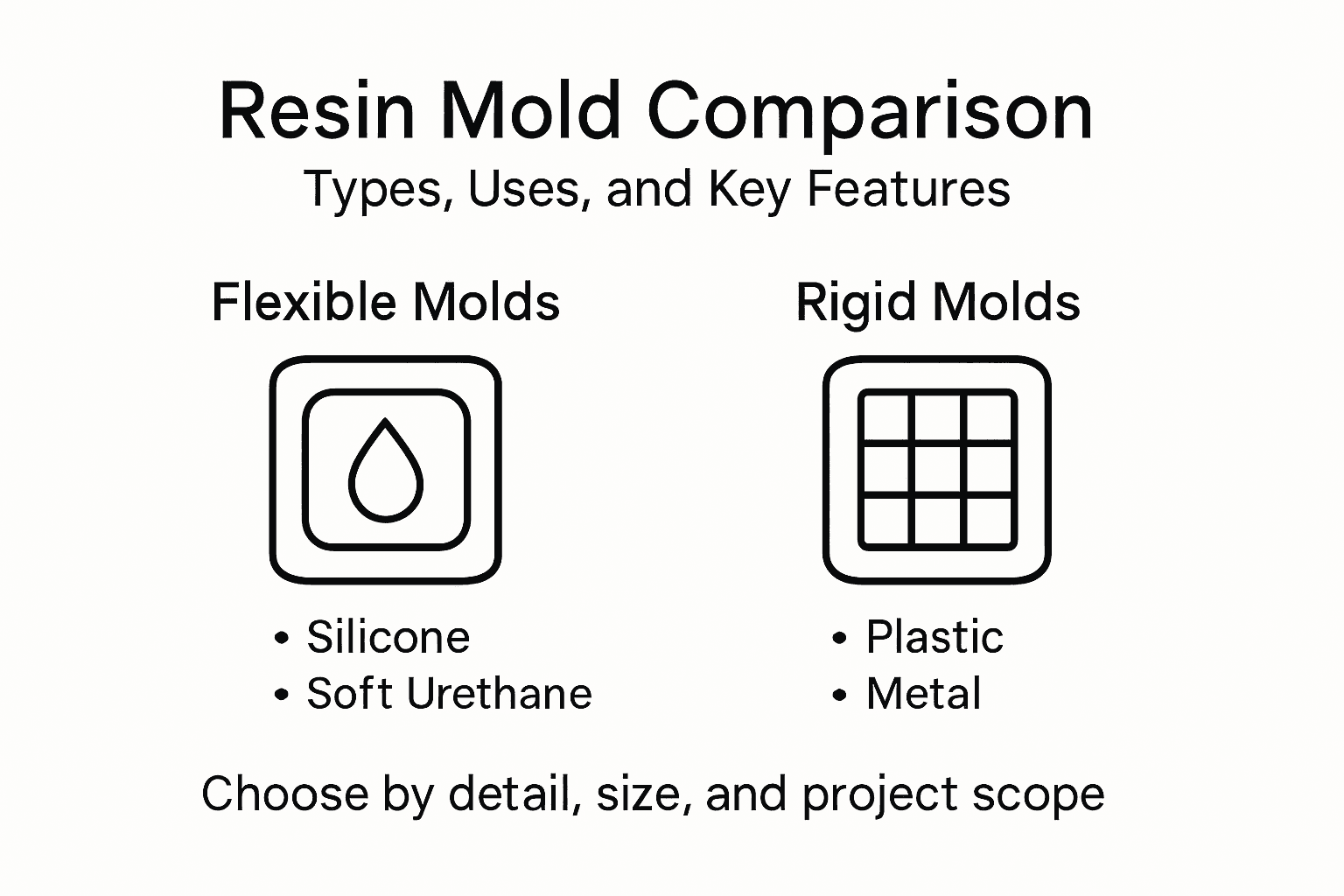
Start with your project scope. Are you making a single piece or launching production? Making ten pendants looks nothing like making fifty matching coasters. Single pieces often benefit from flexible silicone’s detail capture, while production runs demand rigid molds’ consistency. Your answer here eliminates half your options immediately.
Budget shapes your decision too. Silicone molds cost more upfront but last longer through frequent use. Rigid plastic molds cost less but may need replacement sooner. Calculate total cost per piece across 50 uses, not just initial purchase price. Sometimes the pricier option saves money long-term.
Resin type compatibility cannot be ignored. Different resins interact unpredictably with certain mold materials. When deciding between casting approaches, understanding epoxy versus polyester resin characteristics helps you match mold materials correctly. Epoxy prefers certain silicone formulations while polyester works better with rigid plastic molds. Mismatching these creates problems like sticking, discoloration, or incomplete curing.
Design complexity determines flexibility needs. Ornate jewelry with fine details and undercuts screams for silicone’s forgiving nature. Geometric home décor like simple box molds or flat shapes work beautifully in rigid materials. Think about your piece’s shape before ordering.
Testing beats guessing. If you’re uncertain, buy one affordable mold in your preferred material, run a test pour, and evaluate results. Spending $12 on a test prevents $50 mistakes. Quality mold suppliers support this approach and appreciate customers who ask questions before bulk purchasing.
Pro tip: Create a simple comparison sheet listing your project scope, budget per piece, resin type, design complexity, and expected mold lifespan to remove emotion from the decision and ensure you pick the optimal mold type.
Discover the Perfect Resin Molds and Supplies for Your Creative Journey
Understanding the differences between flexible silicone and rigid resin molds is essential to avoid costly mistakes and frustration. If you want molds that deliver reliability, flawless details, and compatibility with your resin type, you need a trusted source offering high-quality options. Whether you are crafting delicate jewelry or producing consistent geometric pieces, matching your project’s needs with the right mold material is key to success.
Explore Krystal Resin to find expertly selected resin molds alongside premium resins and colorants that help you master your art. With free shipping on orders over a certain amount and fast delivery options including US-based shipping, you can trust us to support every step of your creative process. Don’t wait until your next project to experience the confidence that comes from using quality materials designed for flawless casting. Start shopping now and transform your resin art into professional results today.
Frequently Asked Questions
What is a resin mold and how does it work?
A resin mold is a cavity designed to hold liquid resin while it hardens into a specific shape. It captures every detail of the mold’s interior through the effects of gravity and surface tension.
What are the main types of resin molds and their uses?
The two main types of resin molds are flexible silicone molds and rigid molds. Silicone molds are ideal for jewelry and intricate art due to their flexibility, while rigid molds are better suited for production runs and geometric shapes where precision is key.
How do I ensure my resin molds last longer?
To extend the lifespan of your resin molds, use mold release spray before pouring, clean molds immediately after use, store them in a cool, dry place away from UV exposure, and regularly inspect them for signs of wear or damage.
Is it necessary to prepare molds before using them?
Yes, it is essential to prepare molds before use. Applying mold release spray prevents resin from sticking to the mold, which helps avoid damage to both the resin piece and the mold itself.
Recommended