

Casting vs Coating Resin: Choosing the Right Type
- Nima
- Jan 7
- 7 min read

Choosing the wrong resin type can ruin hours of creative work for american artists and DIY makers. With over 80 percent of beginner resin projects affected by mixing or pouring issues, understanding the differences between casting and coating resin is more than just technical detail. This guide reveals how each resin formulation tackles unique creative challenges, helping you select the best option for your next North American art or craft project with confidence.
Table of Contents
Key Takeaways
Point | Details |
Understand Resin Types | Choose between casting resin for deep pours and coating resin for thin surface applications based on your project needs. |
Follow Mix Ratios | Accurate measurement of resin and hardener is essential to ensure proper curing and structural integrity. |
Control Pour Thickness | Be mindful of pour depth: casting resin can be poured 2-4 inches thick, while coating resin is limited to 1/4 inch to avoid heat issues. |
Avoid Common Mistakes | Prevent errors like improper mixing or rushing the pour, as these can lead to project failures or unsatisfactory results. |
Defining Casting and Coating Resin Types
Resin artists and DIY enthusiasts work with two distinct types of resin materials: casting resin and coating resin. These specialized formulations serve unique purposes in creative projects, each designed with specific characteristics to achieve optimal results. Casting resin, also known as deep-pour resin, is engineered for creating substantial three-dimensional objects with remarkable depth and clarity.
Casting resin distinguishes itself through several key properties that make it ideal for complex artistic endeavors. It features an extremely low viscosity, which allows for smooth, bubble-free pours up to 4 inches thick. The extended curing time prevents excessive heat buildup and enables artists to encapsulate intricate objects like botanicals, photographs, or small decorative elements within a crystal-clear medium. River tables, paperweights, and large sculptural pieces often rely on casting resin’s unique formulation to achieve their signature look.
In contrast, coating resin serves a fundamentally different purpose in resin crafting. This type of resin is specifically formulated for thin surface applications, typically ranging between 1-5 millimeters in thickness. With faster curing times and a self-leveling characteristic, coating resin provides a high-gloss finish perfect for sealing artwork, creating protective layers on countertops, or adding a glossy sheen to paintings and other surfaces. Its thicker consistency allows for smoother coverage and an impeccable protective layer.
Pro tip: Always match your resin type to your specific project requirements to ensure the best possible outcome and professional-looking results.
Here’s a quick comparison of casting resin and coating resin properties:
Property | Casting Resin | Coating Resin |
Viscosity | Very low (water-like) | High (syrup-like) |
Typical Pour Depth | 2-4 inches per layer | Up to 1/4 inch (5 mm) |
Curing Speed | Slow, extended curing times | Fast, rapid surface curing |
Main Uses | 3D objects, embedments | Surface sealing, glossy finishes |
Heat Management | Minimal heat buildup | Higher risk if poured thick |
Mix Ratios, Pour Depth, and Curing Times
Mastering the intricacies of resin mixing, pour depth, and curing times is crucial for successful artistic and functional projects. Precise mix ratios are fundamental to achieving optimal resin performance, with different resin types requiring specific proportions of resin to hardener to ensure proper curing and structural integrity.
Casting and coating resins have dramatically different pour depth specifications that directly impact project outcomes. Casting resin allows for substantially deeper pours, typically ranging from 2 to 3 inches per layer, with specialized formulations designed to minimize heat buildup during the curing process. Deep-pour resin technologies enable artists to create substantial three-dimensional objects with minimal risk of exothermic reactions. These resins feature extended curing times that prevent overheating, which can cause discoloration or structural compromises.
Coating resins, by contrast, are engineered for thin surface applications, typically limited to layers less than 1/4 inch thick. Their faster curing times make them ideal for creating smooth, glossy finishes on artwork, countertops, and other surfaces. The mix ratios and curing characteristics vary significantly between casting and coating resins, making it essential for artists to select the appropriate resin type for their specific project requirements.
Pro tip: Always measure your resin and hardener components precisely using calibrated measuring tools to ensure consistent and reliable results in your resin projects.
Key Differences in Viscosity and Application
The viscosity of resin plays a critical role in determining its suitability for specific artistic and functional applications. Epoxy resins exhibit remarkable variations in flow characteristics based on their molecular composition, with viscosity serving as a key indicator of performance across different project types.
Casting resin demonstrates uniquely low viscosity, behaving almost like water when poured. This fluid-like property enables artists to create intricate three-dimensional objects with minimal air bubble entrapment. The thin, free-flowing nature allows the resin to seamlessly fill complex molds, capturing minute details with exceptional clarity. By comparison, coating resin presents a significantly higher viscosity, more akin to syrup, which provides superior surface coverage and self-leveling capabilities.
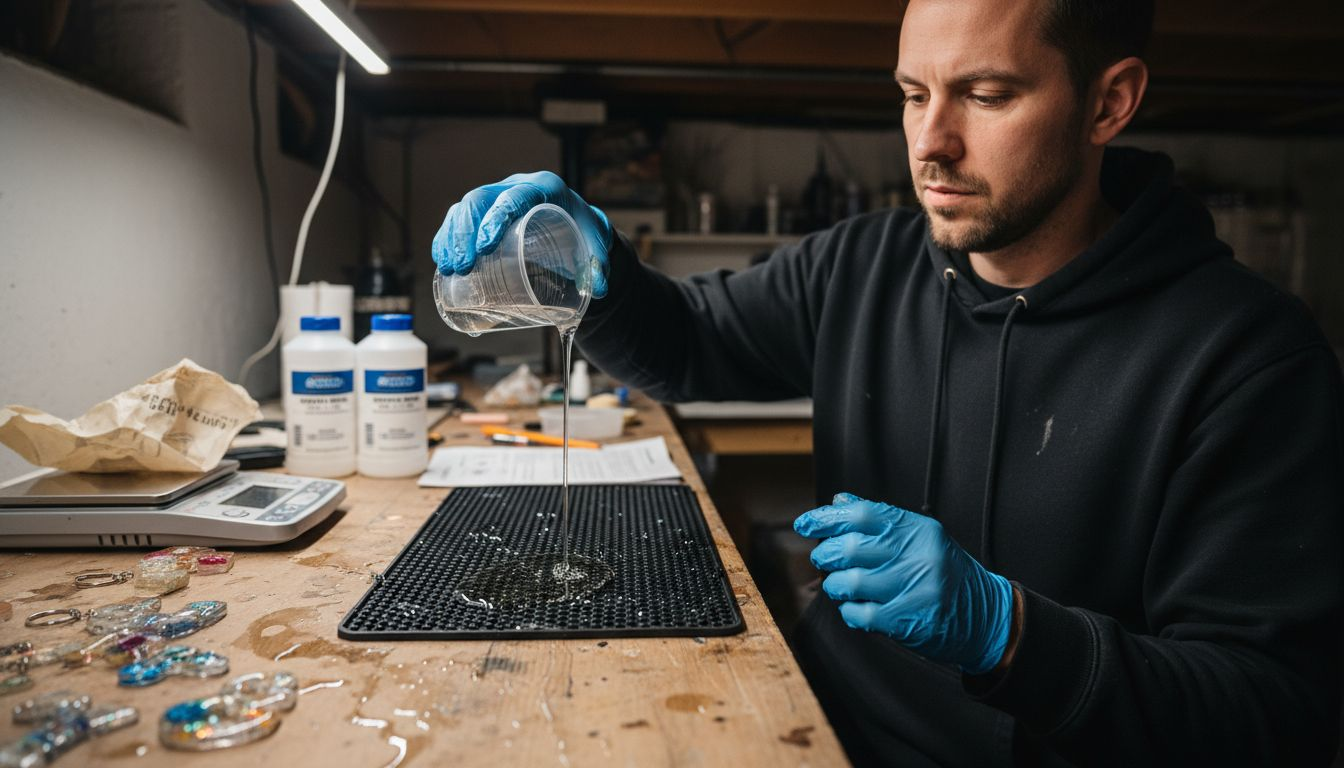
The viscosity differences between casting and coating resins fundamentally dictate their application techniques and final outcomes. Casting resins’ lower viscosity supports deeper pours and slower curing times, minimizing heat buildup and allowing for more substantial encapsulation projects. Coating resins, with their thicker consistency, excel at creating smooth, protective surface layers on artwork, furniture, and decorative pieces. These distinct viscosity characteristics mean that artists must carefully select their resin type based on the specific requirements of their creative vision.
Pro tip: Test your resin’s viscosity by observing its flow characteristics and conducting small sample pours to understand its specific behavioral nuances before starting your main project.
Ideal Uses For Casting vs Coating Resin
Resin artists and craftspeople must carefully match their project requirements with the appropriate resin type to achieve optimal results. Different resin formulations are specifically designed for distinct creative and functional applications, with each type offering unique performance characteristics that can dramatically impact the final product’s quality.
Casting resin excels in projects requiring substantial depth and volume, making it ideal for creating intricate river tables, large sculptural pieces, and complex three-dimensional embedments. Its slow curing properties and minimal heat generation allow artists to pour thick layers ranging from 2-4 inches, capturing delicate objects like botanicals, photographs, or decorative elements within a crystal-clear medium. The low exothermic reaction ensures that intricate details remain preserved without risk of thermal degradation or discoloration.
In contrast, coating resin is purpose-built for surface applications that demand a smooth, high-gloss finish. These resins are perfect for creating protective layers on artwork, furniture, countertops, and epoxy flooring. Their higher viscosity and faster curing times enable artists and craftspeople to achieve quick, uniform surface coverage with exceptional clarity and durability. While coating resins work brilliantly for thin layers up to 1/4 inch thick, attempting to use them for deep pours can result in heat damage and compromised structural integrity.
Pro tip: Always perform a small test pour with your chosen resin to understand its specific flow characteristics and curing behavior before committing to a large-scale project.
Risks, Common Errors, and What To Avoid
Resin artistry demands precision and careful technique to avoid potential project-destroying mistakes. Understanding common casting resin errors is crucial for achieving professional-quality results, with many pitfalls stemming from seemingly minor procedural oversights.
One of the most significant risks in resin work involves improper mixing ratios, which can lead to catastrophic project failures. Casting resin cracking frequently occurs due to exothermic heat reactions, incorrect hardener proportions, or exceeding recommended pour depths. Artists must meticulously measure resin and hardener components, ensuring precise proportions to prevent tacky surfaces, incomplete curing, or structural weaknesses. Environmental factors like humidity and temperature can dramatically impact curing quality, making consistent workspace conditions essential for successful resin projects.
Both casting and coating resins present unique challenges that require careful navigation. For casting resin, common mistakes include over-pouring, which can induce dangerous heat buildup, and pouring too quickly, which introduces unwanted air bubbles. Coating resins are particularly sensitive to application technique, with risks of uneven coverage, trapped moisture, or premature yellowing. Practitioners must understand each resin type’s specific limitations, avoiding cross-application that could compromise project integrity. Proper mold preparation, slow and controlled pouring, and maintaining optimal ambient temperatures are critical strategies for minimizing potential defects.
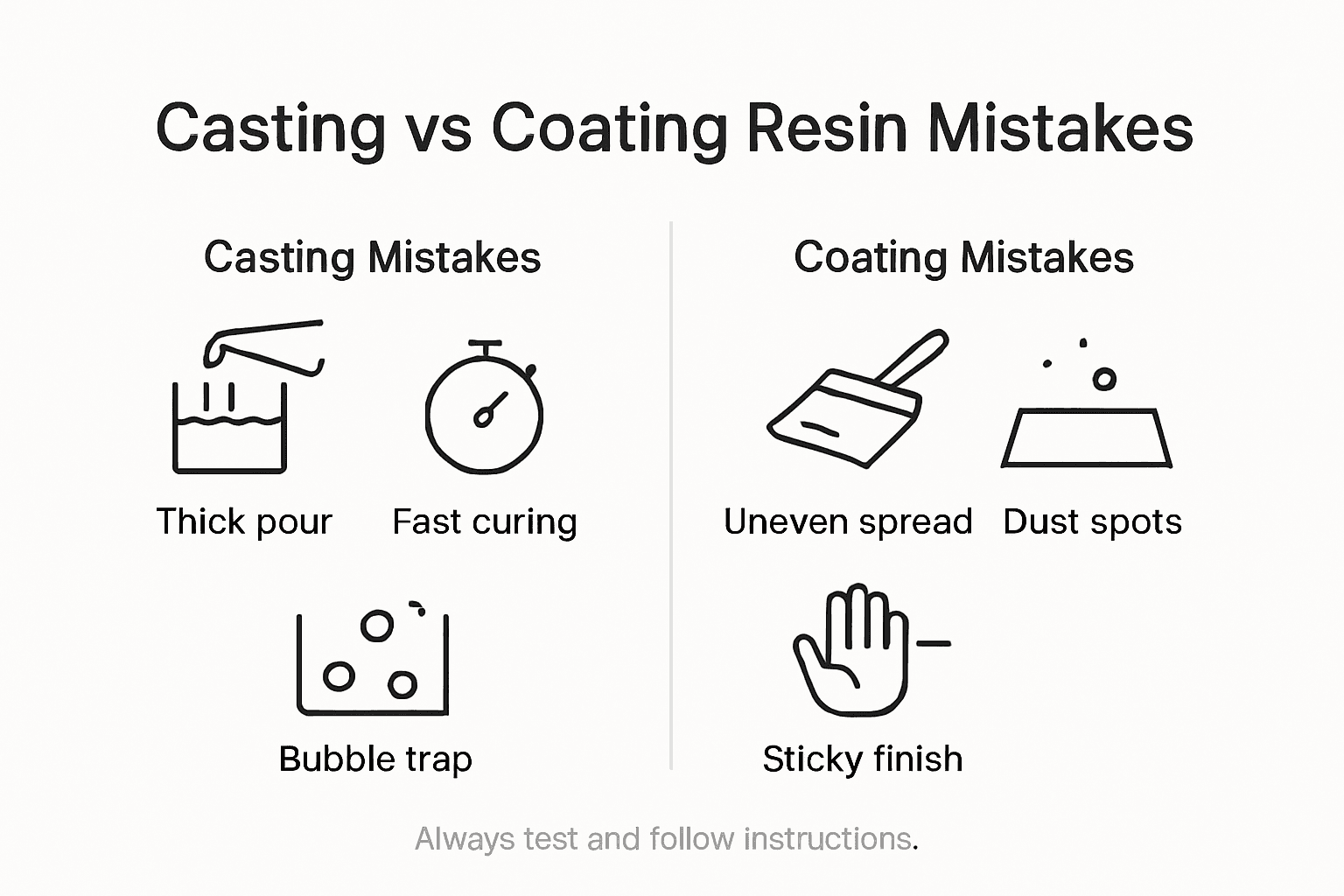
The following table highlights common mistakes and solutions in resin projects:
Mistake | Impact on Project | Prevention Technique |
Wrong mix ratio | Poor curing, soft spots | Use calibrated measuring tools |
Pouring too thick | Excessive heat, cracking | Follow manufacturer depth specs |
Rushing the pour | Air bubbles, uneven finish | Pour slowly and patiently |
Inadequate environment | Weak or tacky results | Control humidity and temperature |
Pro tip: Always conduct a small test pour in controlled conditions to understand your specific resin’s unique behavior and potential failure points before committing to a full project.
Discover the Perfect Resin for Your Next Project with Krystal Resin
Choosing between casting resin and coating resin is essential for achieving professional results without costly mistakes. Whether you need the ultra-clear, deep-pour capabilities for stunning 3D embedments or a fast-curing, high-gloss coat for surface protection, knowing the right type of resin can save you from cracking, bubbles, and curing issues. At Krystal Resin, we understand the challenges artists face with viscosity, curing times, and mix ratios, which is why we offer a carefully selected range of premium resins tailored for every creative need.
Browse our selection to find casting resins ideal for thick pours or coating resins designed for flawless surface finishes. Start now by visiting Krystal Resin and explore solutions crafted to boost your confidence and bring your artistic vision to life. Don’t wait until your next project suffers from avoidable issues Take advantage of our convenient shipping options and expert-curated supplies to get your resin art off to the perfect start today.
Frequently Asked Questions
What is the difference between casting resin and coating resin?
Casting resin is designed for creating deep, three-dimensional objects and can be poured up to 4 inches thick. In contrast, coating resin is formulated for thin surface applications, typically limited to 1/4 inch thickness, and provides a glossy finish on surfaces.
How do I determine the right mix ratio for casting and coating resins?
The mix ratio for casting and coating resins varies significantly. Always follow the manufacturer’s guidelines for specific proportions of resin to hardener to ensure proper curing and structural integrity.
What are the common mistakes to avoid when using casting or coating resin?
Common mistakes include incorrect mix ratios, pouring too thickly, rushing the pour, and not controlling the environment. These can lead to poor curing, cracking, and uneven finishes. Always measure accurately and test in a controlled environment first.
Can I use coating resin for deep pours?
No, coating resin is not suitable for deep pours. It is engineered for thin layers and can generate excessive heat if poured thickly, which may result in damage and compromised structural integrity.
Recommended
Comments