

Epoxy vs Polyester Resin: Making the Right Choice


Over eighty percent of American resin artists prefer epoxy or polyester resin for their unique strengths and project outcomes. Whether you are customizing jewelry, repairing marine gear, or experimenting with vibrant artwork, understanding the differences can transform your results. Choosing the right resin is more than just a material decision—it directly impacts cost, finish, durability, and safety for every creative or home repair project.
Table of Contents
Key Takeaways
Point | Details |
Understanding Resin Types | Epoxy and polyester resins serve different functions; epoxy offers superior strength and durability, while polyester is faster and more cost-effective. |
Application Suitability | Choose epoxy for high-stress applications and fine arts, while polyester fits well for budget projects and larger-scale tasks. |
Safety and Environmental Considerations | Polyester resins have higher VOC emissions, necessitating safety precautions; epoxy, while safer, still requires protective measures. |
Testing and Experimentation | Always conduct small test projects to assess resin performance and compatibility before larger investments in materials. |
Epoxy and Polyester Resin Defined Clearly
Resin materials are foundational for artists and craftspeople seeking durable, versatile solutions for creative projects. Polymer chemistry reveals distinct characteristics between epoxy and polyester resins that significantly impact their performance and application potential.
Epoxy resin represents a sophisticated thermosetting polymer formed through chemical reactions between epoxide compounds and specialized curing agents. This unique molecular structure delivers exceptional properties including superior adhesion, remarkable mechanical strength, and outstanding chemical resistance. Epoxy resins excel in applications demanding precision and durability, such as protective coatings, electrical insulation, and high-performance composite materials.
Polyester resins, by contrast, emerge from polycondensation processes involving alcohols and acids, typically utilizing unsaturated polyester formulations. These resins cure through free-radical polymerization, making them particularly well-suited for fiberglass composites, general casting work, and decorative applications. While polyester resins offer more affordability and faster curing times, they generally demonstrate lower mechanical toughness compared to epoxy counterparts.
Understanding these fundamental differences allows craftspeople to select the most appropriate resin for their specific project requirements. Mechanical properties, chemical resistance, curing characteristics, and cost considerations all play critical roles in determining the optimal resin choice.
Here’s a practical comparison of epoxy and polyester resins for quick reference:
Aspect | Epoxy Resin | Polyester Resin |
Adhesion Strength | Extremely strong | Moderate |
Curing Speed | Slower, more controllable | Rapid, less working time |
VOC Emissions | Lower, with ventilation needed | Higher, needs extra precautions |
Cost Range | Higher upfront investment | Lower per unit |
Typical Art Use | Jewelry, resin art, castings | Simple decoration, bulk items |
Repair Application | Load-bearing, waterproof repairs | Automotive and marine panels |
Pro tip: Always conduct a small test project with your chosen resin to understand its specific working characteristics and potential limitations before committing to a larger investment.
Core Differences in Chemistry and Performance
Chemical composition fundamentally distinguishes epoxy and polyester resins, driving their unique performance characteristics. These molecular differences impact everything from mechanical strength to curing behavior, making material selection critical for successful craft and industrial projects.
Epoxy resins feature epoxide groups that react with hardeners to create dense, three-dimensional cross-linked networks. This complex molecular structure enables exceptional mechanical properties, including superior tensile strength, remarkable adhesion, and outstanding chemical resistance. The intricate cross-linking process results in a robust material that withstands significant mechanical stress and environmental challenges, making epoxy ideal for high-performance applications requiring durability and precision.
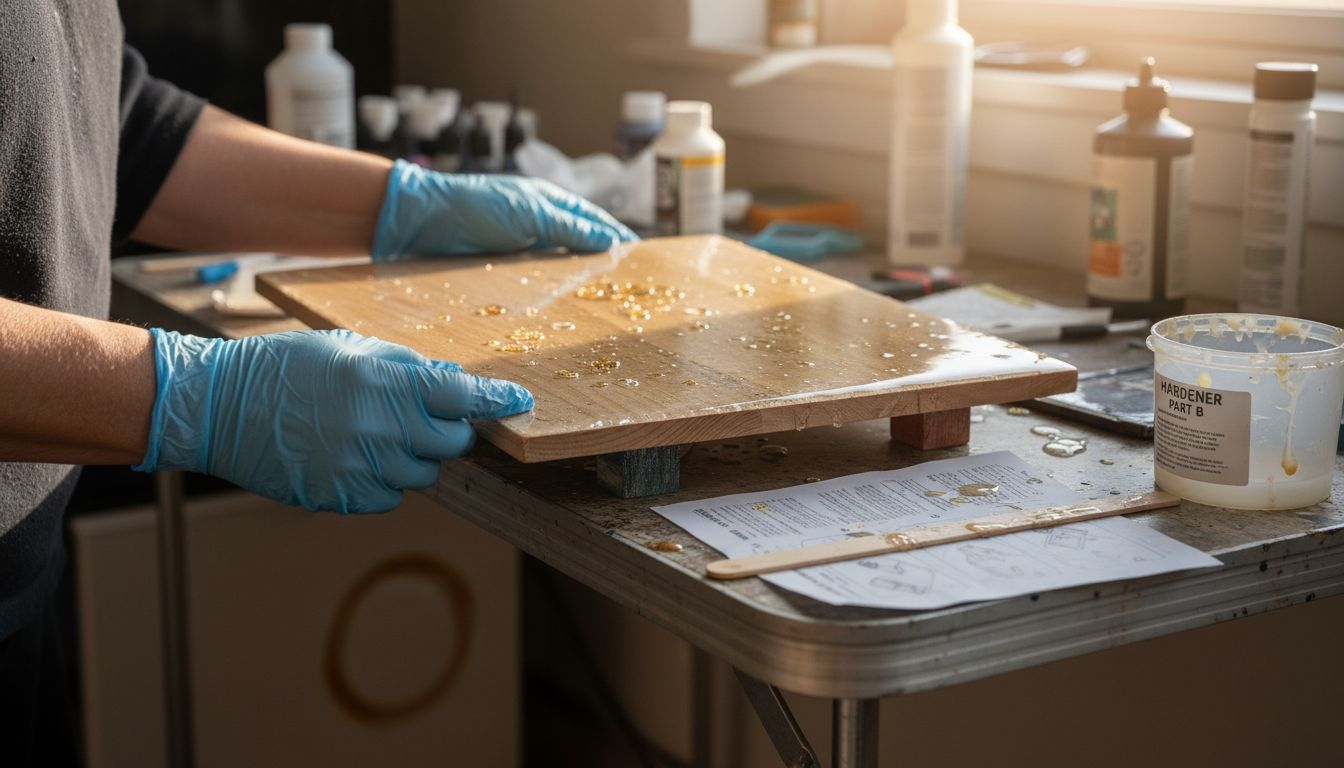
Polyester resins, conversely, cure through free-radical polymerization between unsaturated polyesters and styrene monomers. Their molecular structure typically forms linear or lightly cross-linked chains, which contribute to faster curing times and lower production costs. However, this structural characteristic also means polyester resins demonstrate reduced mechanical strength, lower chemical resistance, and increased brittleness compared to epoxy counterparts.
The performance trade-offs between these resin types are significant. Epoxy resins excel in applications demanding high impact resistance, flexibility, and long-term stability. Polyester resins offer faster processing and lower initial costs, making them attractive for projects where absolute peak performance is not critical. Understanding these nuanced differences empowers craftspeople and engineers to select the most appropriate resin for their specific project requirements.
Pro tip: Always consider your project’s specific environmental and mechanical stress requirements when selecting between epoxy and polyester resins, as their distinct chemical structures dramatically influence long-term performance.
Use Cases in Art, DIY, and Repairs
Resin applications span diverse creative and practical domains, with epoxy and polyester resins serving unique roles across art, DIY projects, and repair work. Understanding their distinct characteristics helps craftspeople and hobbyists select the most appropriate material for their specific needs.
In artistic applications, epoxy resins reign supreme for creating stunning visual effects. Their exceptional clarity, superior finishing qualities, and ability to embed objects make them ideal for jewelry making, decorative artwork, and intricate craft projects. Artists appreciate epoxy’s remarkable transparency, which allows for creating depth-rich pieces like river tables, geode-inspired artwork, and complex casting projects that showcase intricate details and vibrant color interactions.
DIY enthusiasts and repair professionals find different strengths in each resin type. Epoxy excels in high-stress repair scenarios requiring superior bonding and environmental resistance, making it perfect for fixing structural components, creating durable coatings, and reinforcing weak or damaged materials. Polyester resins, with their faster curing times and lower costs, become attractive for large-volume projects like boat repairs, automotive work, and marine structures where moderate strength and rapid production are prioritized over peak performance.
The selection between epoxy and polyester resins ultimately depends on project-specific requirements. Factors like desired finish, curing time, mechanical stress, budget constraints, and environmental exposure play crucial roles in determining the most suitable resin. Professionals and hobbyists must carefully evaluate these parameters to ensure optimal results in their creative and practical endeavors.
Pro tip: Always perform a small test project with your chosen resin to understand its specific working characteristics, curing behavior, and compatibility with your materials before committing to a larger investment.
Cost, Safety, and Environmental Impact
Environmental considerations shape resin selection for conscientious artists and craftspeople. Understanding the nuanced implications of cost, safety, and ecological impact becomes crucial when choosing between epoxy and polyester resins.
From a cost perspective, polyester resins typically offer more budget-friendly options with lower initial material expenses. They cure faster and require less expensive processing equipment, making them attractive for large-volume projects and cost-sensitive applications. Epoxy resins, while generally more expensive, provide superior performance characteristics that often justify their higher price point through enhanced durability, longer product lifecycles, and more sophisticated finishing capabilities.
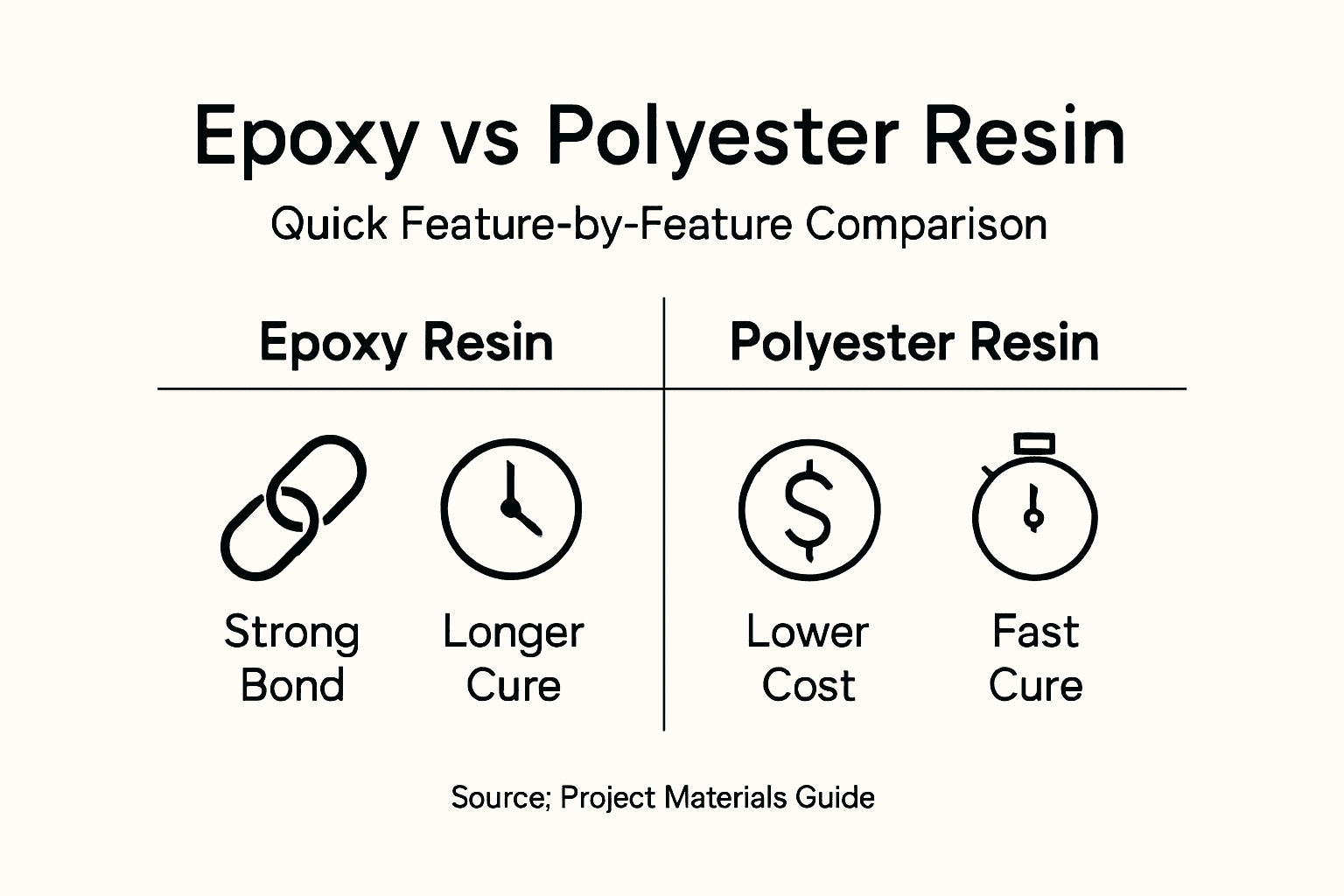
Safety considerations demand careful attention for both resin types. Polyester resins contain higher levels of volatile organic compounds (VOCs), presenting greater respiratory and environmental risks during application. Epoxy resins, while comparatively safer, still require robust personal protective equipment including respirators, gloves, and adequate ventilation. Professional craftspeople must prioritize workplace safety by implementing comprehensive protective strategies, understanding material-specific handling requirements, and maintaining clean, well-ventilated workspaces.
Environmental impacts remain a significant concern for both resin types, given their petroleum-based origins. Polyester resins typically generate higher environmental footprints due to increased VOC emissions and less sustainable manufacturing processes. Emerging innovations in bio-based and recycled resin alternatives offer promising pathways for reducing ecological consequences, encouraging responsible material selection among environmentally conscious creators.
Pro tip: Always research and invest in proper personal protective equipment specific to your chosen resin type, and work in well-ventilated areas to minimize potential health risks.
Choosing the Best Resin for Your Project
Project requirements dictate resin selection with nuanced considerations that extend far beyond simple material preferences. Successful craftspeople understand that each project demands a strategic approach to material selection, balancing performance, budget, and specific technical requirements.
For projects requiring maximum strength and durability, epoxy resins stand out as the premier choice. Their exceptional mechanical properties, superior adhesion, and remarkable chemical resistance make them ideal for high-stress applications like marine equipment, architectural elements, and precision engineering projects. Artists and engineers alike appreciate epoxy’s ability to create incredibly strong bonds, withstand extreme environmental conditions, and deliver a flawless, professional-grade finish.
Polyester resins emerge as the go-to solution for budget-conscious creators and projects prioritizing rapid production. These resins excel in scenarios where absolute peak performance is less critical, such as automotive body work, basic repairs, and large-volume manufacturing processes. Their faster curing times and lower material costs make polyester resins attractive for quick turnaround projects that require functional rather than extraordinary performance.
Ultimately, choosing between epoxy and polyester resins requires a holistic evaluation of project-specific parameters. Key decision factors include mechanical load requirements, environmental exposure, desired finish quality, budget constraints, and working time considerations. Professionals recommend conducting small-scale tests and thoroughly understanding each resin’s unique characteristics before committing to a full-scale project.
Select the best resin by matching project types with optimal material characteristics:
Project Type | Recommended Resin | Key Reason for Choice |
High-stress repairs | Epoxy | Maximum bond and durability |
Budget crafts | Polyester | Fast curing, lower cost |
Clear artistic work | Epoxy | Exceptional transparency |
Large surface area | Polyester | Efficient for rapid, large projects |
Chemical resistance | Epoxy | Superior protection from solvents |
Pro tip: Always purchase a small quantity of your chosen resin first and perform a test piece to validate its performance, compatibility, and suitability for your specific project requirements.
Find the Perfect Resin for Your Creative Vision
Choosing between epoxy and polyester resin can feel challenging when juggling factors like strength, curing time, cost, and finish quality. This article highlights how understanding key terms such as adhesion strength, chemical resistance, and curing speed empowers you to make confident decisions tailored to your projects. Whether you seek durable repairs, crystal-clear artistic effects, or budget-friendly bulk applications, pinpointing the right resin is essential to avoid frustration and wasted materials.
At Krystal Resin we specialize in helping artists, hobbyists, and professionals overcome these exact hurdles by offering a curated selection of high-quality epoxy and polyester resins alongside colorants, molds, and essential accessories. Our convenient shopping experience combined with fast shipping ensures you spend less time waiting and more time creating.
Elevate your resin projects today with confidence by exploring our trusted products designed to meet your unique needs.
Ready to make your choice with ease Explore our complete range of resin supplies
Start creating your masterpiece now at Krystal Resin where quality meets convenience and expert support is always ready to guide you.
Frequently Asked Questions
What are the main differences between epoxy and polyester resin?
Epoxy resin offers superior adhesion, mechanical strength, and chemical resistance, making it ideal for high-performance applications. Polyester resin is faster to cure and more affordable, but generally has lower mechanical toughness and chemical resistance.
In what applications is epoxy resin best used?
Epoxy resin is best used in applications requiring durability and precision, such as protective coatings, electrical insulation, jewelry making, and high-performance composite materials.
Can polyester resin be used for repairs?
Yes, polyester resin can be used for repairs, particularly for automotive and marine panels where rapid curing and lower costs are prioritized over peak performance.
How should I choose between epoxy and polyester resin for my project?
Consider the specific requirements of your project, such as desired mechanical strength, budget, curing time, and environmental exposure. Conducting a small test project can help determine which resin is more suitable.
Recommended
Comments